Whitewater Rafting for Beginners: Rapid Classes, Costs and What to Expect
By the Outdoors Haven editors 7 min read Updated October 6, 2026
What changed: Expanded in October 2026 and re-checked against official sources such as the NPS, state agencies and manufacturers.
Pack this into your head
- Rapids are graded Class I to VI on the International Scale of River Difficulty
- Class II to III with a guide is the right first trip for most people
- Water level changes difficulty; snowmelt and dam releases can raise a class
- Half days run around $90 and full days about $110 to $160 in 2026
- Minimum ages rise with difficulty, from about 7 to about 12
- If you swim: on your back, feet downstream and up, never stand
On this route
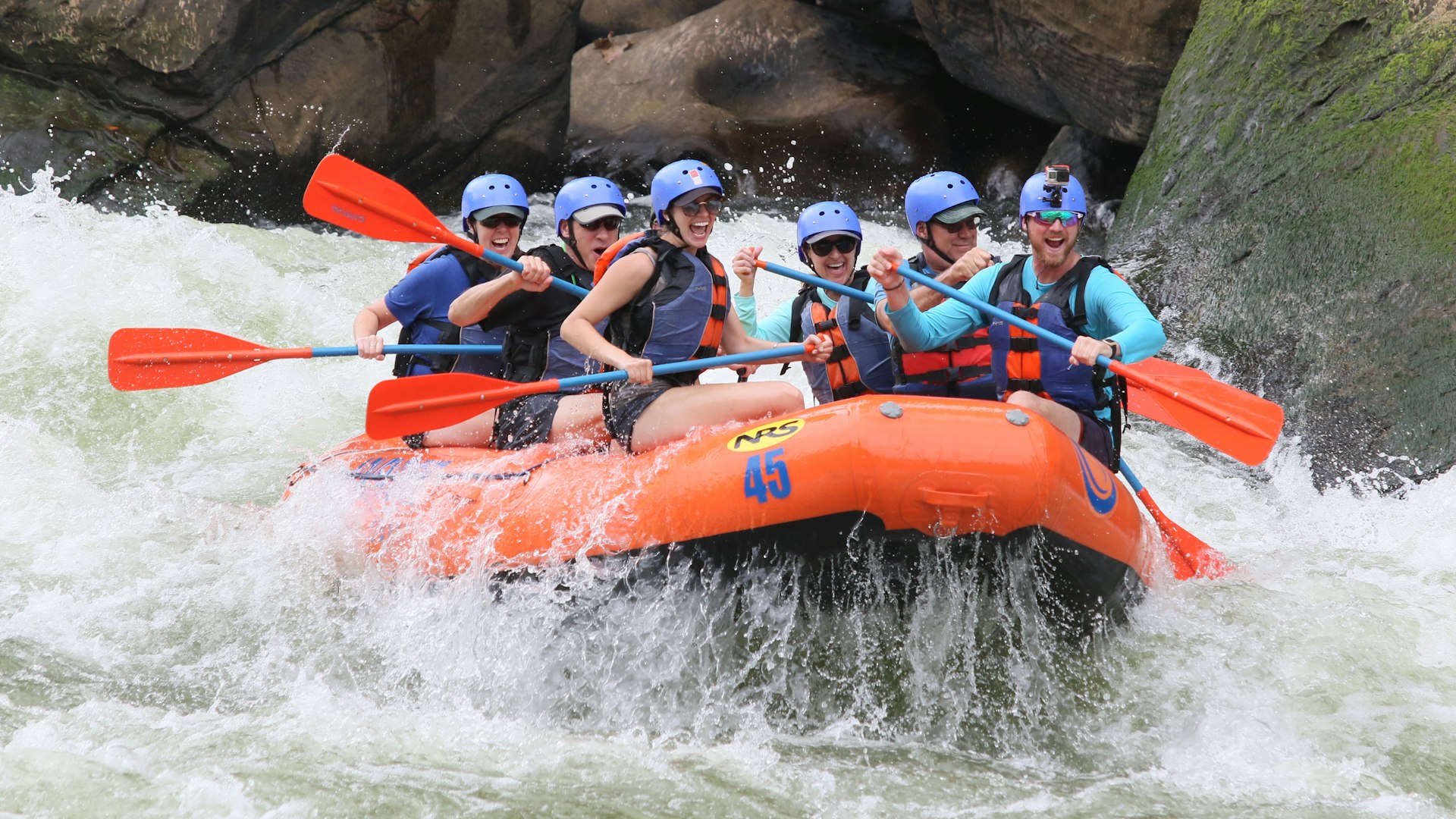
Whitewater rafting for beginners means Class II or III rapids with a licensed outfitter. Class II suits young children and nervous first-timers, and Class III is the classic first adventure trip for reasonably fit adults and teens. As of 2026, half-day trips on popular rivers are commonly listed around $90 per person, and full days with lunch about $110 to $160. If you fall in, float on your back with your feet pointed downstream and never try to stand up.
Rafting is one of the few adventure sports a complete beginner can do safely on day one. A trained guide steers, the outfitter provides the gear, and the difficulty of the water is graded on a standard scale. Understanding that scale, and how water levels change it, is most of what you need before you book.
Whitewater classes explained
Rapids in the US are rated on the International Scale of River Difficulty, published here by American Whitewater. It runs from Class I to Class VI.
| Class | What the water is like | Who it suits |
|---|---|---|
| Class I | Moving water with riffles and small waves; few obstacles | Float trips, young children |
| Class II | Straightforward rapids with wide, clear channels and medium waves | Families, nervous first-timers |
| Class III | Irregular waves that can swamp a boat, narrow passages, real maneuvering | Fit first-timers with a guide; the classic beginner adventure |
| Class IV | Powerful, turbulent rapids, precise moves under pressure, hazards to avoid | Fit rafters with previous experience |
| Class V | Long, violent, complex rapids with serious consequences for a swim | Experienced paddlers and expert guides |
| Class VI | Rarely run; extreme danger, at the limit of what is possible | Experts only, in ideal conditions |
American Whitewater stresses that the scale is not exact: rivers do not always fit one category, local interpretations differ, and a whole run of continuous Class IV is a much bigger day than one Class IV rapid on an otherwise easy river. It also advises allowing an extra margin of safety when the water is cold, the flow is high, or the river is remote.
How water levels change the difficulty
A river’s class is not fixed. The same stretch can be a splashy Class III in August and a much more serious run during spring snowmelt, when water is higher, faster and colder. Floods and fallen trees can change rapids from one season to the next.
Many popular rivers are dam-controlled, which makes their season predictable. On the Middle Ocoee in Tennessee, a dam-controlled Class III to IV run, releases set the schedule: weekends in spring and fall and most days in summer. On West Virginia’s Gauley, releases from Summersville Dam in September create Gauley Season, which the National Park Service calls one of the most thrilling whitewater opportunities in the world. It is decidedly not a beginner trip.
Good first rivers in the US
| River and section | Class | Main season | Notes for beginners |
|---|---|---|---|
| Arkansas River, Browns Canyon (Colorado) | III, up to IV at high water | Late spring through summer | The busiest stretch of the most popular rafting river in the state; calmer, family-friendly flows in July and August |
| Arkansas River, Bighorn Sheep Canyon | II to III | Late spring through summer | Gentler option below Salida |
| Upper New River (West Virginia) | I to III | April to October | Long pools and easier rapids; good for families |
| Lower New River Gorge (West Virginia) | III to V | April to October | Big water for fit first-timers with a guide; age limits apply |
| Middle Ocoee (Tennessee) | III to IV | March to October, on dam releases | Short, continuous, very popular guided run |
| Upper Gauley (West Virginia) | III to V+ | September to mid-October releases | Not for beginners; outfitters screen for experience |
Colorado Parks and Wildlife’s Arkansas Headwaters river guide rates Browns Canyon Class III to IV, calls it the busiest stretch of the river, and lists harder sections such as the Numbers and the Royal Gorge for experienced boaters. In West Virginia, New River Gorge National Park and Preserve notes that the upper river has long pools and easier rapids, while the Lower Gorge has some of the biggest rapids in the state.
Multi-day trips are a different category. In the Grand Canyon, the park lists 14 commercial river companies running trips of 3 to 18 days on motorized rafts, oar rafts, paddle rafts or dories over 226 river miles from Lees Ferry to Diamond Creek, according to the Grand Canyon’s commercial river trips page. These book far ahead and cost far more than a day trip.
What a guided rafting trip costs
Prices depend on the river, the length of trip, weekday or weekend, and how remote the river is. As examples from 2026 listings:
- A half-day Browns Canyon trip on the Arkansas is listed from about $89 to $94 per adult, with a wetsuit, splash jacket, helmet and life jacket included.
- Full-day Lower New River trips with a riverside lunch are listed from about $109 to $159 per person by different outfitters, often cheaper on weekdays.
- Multi-day wilderness trips, such as the Grand Canyon, are priced per trip and run into the thousands.
Check what is included. Wetsuits and splash gear are sometimes included and sometimes rented separately, which matters in spring snowmelt. Photos, shuttles and park or river fees can also be extra.
Age, fitness and swimming
Outfitters set minimum ages that rise with the difficulty. Gentle Class II trips and some Class III half days accept children from about age 7, while bigger trips such as the Lower New River commonly start around 12. Some outfitters also set minimum weights so that a life jacket fits properly.
You do not need to be an athlete, but you do need to paddle on command for a few hours, hold on in big waves, follow instructions quickly, and be comfortable in water if you swim. Tell the outfitter about heart conditions, pregnancy, recent injuries or anything else that could matter in cold water or a hard swim.
What happens on the day
- Check-in and waiver. Arrive early; trips leave on schedule.
- Gear fitting. The guide tightens your life jacket until it cannot be pulled up over your chin, and fits a helmet.
- Safety talk. How to hold the paddle by the T-grip, how to sit, what the paddle commands mean, and what to do if you fall in or the raft flips.
- The river. A half-day trip usually means about 2.5 to 3 hours on the water and 4 to 5 hours total with the shuttle.
Listen closely to the safety talk even if you have heard one before. Every river has its own hazards, and the guide knows where they are.
If you fall in
Falling out of the raft is common on Class III and above, and usually it is a short, cold swim. The correct position is not instinctive, which is why guides drill it:
- Float on your back with your feet downstream and up at the surface, toes visible, so your feet hit rocks before anything else.
- Never try to stand up in moving water. A foot caught under a rock while the current pushes on your body can hold you underwater.
- Look for the guide. They will tell you to swim toward the raft or shore, or throw you a rope. Grab the rope, not the bag, and roll onto your back.
- Swim hard away from trees and logs in the water. Water flows through them while you cannot, which is why guides treat these strainers as one of the worst hazards on a river.
- If the raft flips and you surface underneath, push along the raft floor to the edge.
Keep the helmet and life jacket on and fastened for the whole trip, including the calm sections. No reputable outfitter allows otherwise.
What to wear and bring
Wear quick-drying synthetic clothing or a swimsuit, not cotton, and shoes that strap firmly to your feet: river sandals, water shoes or old sneakers. Flip-flops come off in the first rapid. Add sunglasses with a retainer strap and sunscreen. In cold water, take the wetsuit when it is offered; cold water saps strength far faster than cold air, and our guide to hypothermia and cold water explains why. Bring a full change of dry clothes, a towel, and a warm layer for the drive home. Our guide to layering clothes covers fabrics that work wet.
Choosing an outfitter
Look for an outfitter licensed or permitted by the agency that manages the river. On the New River and Gauley, for example, the park’s commercial whitewater page lists outfitters licensed by the West Virginia Department of Natural Resources. Ask how long guides have worked that river and what swiftwater rescue and first aid training they hold, and ask plainly which section suits your group. An outfitter who suggests the easier run for your children is one who knows what they are doing.
If you enjoy it, the natural next step is a paddle of your own. Our comparison of canoe vs kayak helps you pick a boat, and planning a first canoe trip trades rapids for days of quiet water. For a first rafting trip, the single best decision is booking the section one class easier than your group thinks it can handle, then going back for the harder one next year.
Questions people ask
What class of rapids is good for beginners?
Class II is ideal for young children and nervous first-timers: clear, wide channels and small waves. Class III, with a licensed guide, is the standard first adventure trip for reasonably fit adults and teens, with bigger waves and real maneuvering. Class IV is for people who have rafted before and are fit, and Class V is for experienced paddlers only.
What do the whitewater rafting classes mean?
The International Scale of River Difficulty runs from Class I, moving water with small riffles, to Class VI, rapids that are rarely run and extremely dangerous. Each step up means bigger waves, more obstacles, more precise maneuvering and more serious consequences if you swim. Rivers are often rated as a range, such as Class III to IV, and ratings change with water level.
Do you need to be able to swim to go whitewater rafting?
You should be comfortable in water, but you do not need to be a strong swimmer. You wear a life jacket and helmet the whole time, and the guide's safety talk covers exactly what to do if you fall in. On Class III and harder trips, outfitters may ask about swimming ability and fitness. Tell them honestly about any medical conditions.
Why should you never stand up in a river?
In moving water, a foot can wedge under a rock or in a crack while the current pushes your body over it, pinning you underwater. This foot entrapment is one of the most dangerous situations on a river. Float on your back with your feet up near the surface until you reach slow, shallow water or a rescuer reaches you.
What should I wear whitewater rafting?
Quick-drying synthetic clothing or a swimsuit, shoes that strap on securely such as river sandals or old sneakers, sunglasses with a retainer strap, and sunscreen. Avoid cotton. In cold water, usually spring snowmelt, outfitters provide or rent wetsuits and splash jackets, and many include them in the price. The outfitter supplies the life jacket, helmet and paddle.
Keep going
Next on the trail
Canoe vs Kayak: Which to Choose for Your Trip, Skills and Gear
A canoe is an open boat you kneel or sit high in and paddle with a single-bladed paddle; a kayak is lower,…
Sep 29, 2026 · 7 min
How to Plan Your First Canoe Trip: Route, Permits, Gear and Safety
Plan your first canoe trip on flat water, such as the Boundary Waters in Minnesota or Algonquin in Ontario, for two or…
Oct 6, 2026 · 7 min
How to Choose a Canoe Paddle: Length, Bent vs Straight Shaft, Blades and Materials
To choose a canoe paddle, size it by your seated torso, not your height: sit on a flat chair and measure from…
Oct 13, 2026 · 8 min