How to Plan Your First Canoe Trip: Route, Permits, Gear and Safety
By the Outdoors Haven editors 7 min read Updated October 6, 2026
What changed: Expanded in October 2026 and re-checked against official sources such as the NPS, state agencies and manufacturers.
Pack this into your head
- Choose lakes or slow rivers with designated campsites and easy exits
- Plan 6 to 10 miles a day, counting portages, on a first trip
- Boundary Waters overnight permits are required May 1 to September 30 and limited by entry point
- Wind decides the day on lakes: do big crossings early
- In 2024, 87% of boating drowning victims with known use weren't wearing a life jacket
- Complete outfitting near Ely runs about $100 to $150 per person per day in 2026
- Pack in a few big waterproof bags so portages take two trips, not five
On this route
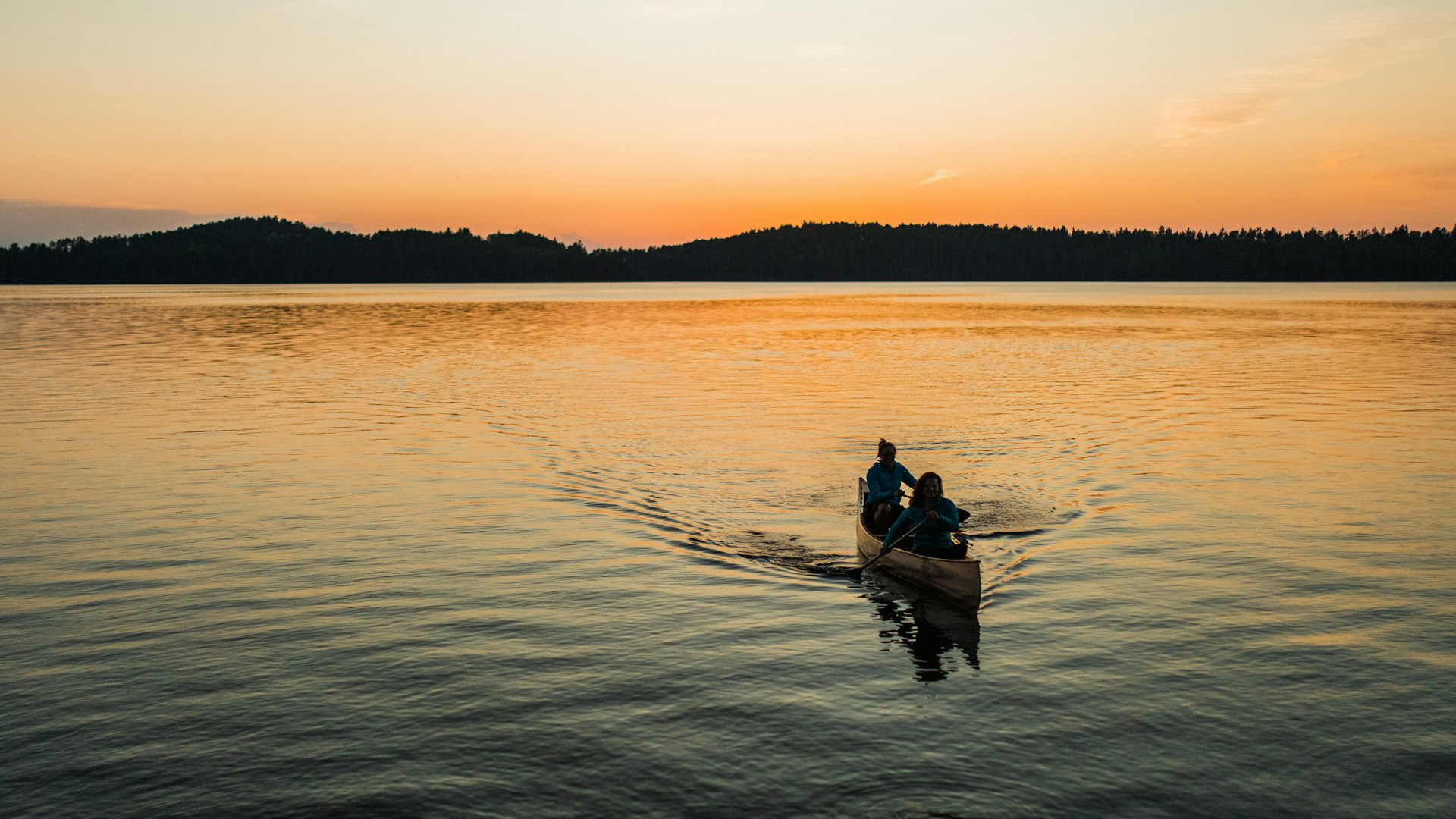
Plan your first canoe trip on flat water, for two or three nights, with about 6 to 10 miles of paddling a day and short portages. Classic beginner destinations are the Boundary Waters Canoe Area Wilderness in northern Minnesota and Algonquin Provincial Park in Ontario, both with designated campsites, marked portages and outfitters who rent everything. Reserve permits early, rent a complete outfit, and pack in a few large waterproof bags.
A first canoe trip goes wrong in predictable ways, and almost none of them involve paddling. The canoe stays upright more easily than people expect. What catches beginners out is wind, cold water, too many miles, and packing the boat like a car trunk.
Pick water that forgives mistakes
Your first trip should be on a lake chain or a slow river with no rapids, a short first day, and an easy way out if the weather turns. Look for designated campsites so you’re not hunting for flat ground at dusk.
- Boundary Waters (Minnesota). A roadless, million-acre lake country with entry points near Ely and the Gunflint Trail, campsites with fire grates and latrines, and dozens of outfitters.
- Algonquin Provincial Park (Ontario). Similar lake-and-portage terrain with interior campsites booked through Ontario Parks. US paddlers need a passport or another accepted border-crossing document.
- Closer to home. The Adirondacks’ St. Regis Canoe Area in New York, the Sylvania Wilderness in Michigan’s Upper Peninsula and the Okefenokee swamp in Georgia all offer flat-water canoe camping with their own permit systems.
If you’re still deciding on the boat itself, canoe vs kayak covers stability, cargo and solo versus tandem. For a gear-heavy trip with portages and two people, a tandem canoe is the usual answer.
Permits: the Boundary Waters as an example
Popular canoe areas manage crowding with permits, and the Boundary Waters is the most structured. According to the permit page on Recreation.gov:
| Rule | Boundary Waters, 2026 |
|---|---|
| Quota season | May 1 to September 30, overnight paddle permit for a set entry point and start date |
| Recreation fee | $16 per adult, $8 per youth (0 to 17) per trip |
| Reservation fee | $6 per permit, non-refundable; $32 minimum deposit |
| Group size | Up to 9 people and 4 watercraft, anywhere: on the water, on portages and in camp |
| Off season | October 1 to April 30, free self-issued permits |
| Camping | Designated sites with a fire grate and latrine only |
| Containers | No cans or glass bottles (except fuel, insect repellent and medicine) |
Reservations open on Recreation.gov in late winter, and popular entry points on summer weekends fill early. Pick your entry point first and build dates around availability, not the other way round. Other areas have different systems, so check the managing agency’s page before you fix dates.
Plan the route and daily miles
A loaded tandem canoe on calm water typically moves at about 2 to 3 miles per hour. That makes 15 miles a day possible, but a first trip shouldn’t try. Plan 6 to 10 miles a day, including portages, and be at camp by early afternoon. A headwind can halve your speed, and you’ll want daylight to set up, swim and cook.
Portages are the overland carries between lakes. In the Boundary Waters they’re measured in rods; one rod is 16.5 feet, so a 100-rod portage is about a third of a mile. That sounds trivial until you walk it twice or three times, once with the canoe and again with the packs. Count total portage distance when comparing routes, not just paddling distance, and keep first-trip portages under about 80 rods, a quarter mile.
Carry a waterproof map of the route and a compass, and know how to use them; lake shorelines look alike and GPS batteries die. Our guide to reading a topographic map covers the basics, including how contour lines show where a portage climbs.
Wind is the real hazard
On a lake, wind decides everything. A crossing that takes 20 minutes on a calm morning can be dangerous by mid-afternoon when whitecaps build over a long stretch of open water.
- Paddle early. Mornings are usually calmest. Do big crossings before lunch.
- Hug the shoreline rather than cutting straight across open water when there’s any wind.
- Wait it out. Sitting on a beach for three hours isn’t a failed day; it’s the right call.
- Keep the bow angled into the waves if you get caught. Side-on to waves is how canoes swamp.
- Get off the water in lightning. Head for shore at the first thunder and stay off open lakes until 30 minutes after the last.
Cold water and life jackets
Northern lakes stay cold well into summer, and falling in is the most serious risk on a canoe trip. The Coast Guard’s 2024 boating statistics found that where the cause of death was known, 76% of victims drowned, and where life jacket use was known, 87% of drowning victims weren’t wearing one. Canoes, kayaks and paddleboards together accounted for about a quarter of all deaths.
The body’s first reaction to cold water is a gasp and uncontrolled breathing, which is why people drown in the first minute rather than from hypothermia. A widely taught rule is 1-10-1: about one minute to get your breathing under control, about ten minutes of useful movement, and roughly an hour before hypothermia can make you unconscious.
- Wear your life jacket, fastened, the whole time on the water. One under the seat doesn’t help in the first minute.
- Dress for the water temperature, not the air, as the American Canoe Association puts it. Avoid cotton; choose fabrics that insulate when wet.
- Attach a whistle to each life jacket.
- Stay with the canoe if you capsize far from shore. A swamped canoe still floats and is easier to spot.
- Know the signs of hypothermia once someone is out of the water. The hypothermia guide covers what to do.
Paddling basics worth learning first
In a tandem canoe the stern paddler, at the back, steers. The bow paddler, at the front, provides power and watches for rocks and deadheads. Put the more experienced paddler in the stern, and swap for a while so both understand the other’s job.
The one stroke worth learning before you go is the J-stroke, a small outward hook at the end of the stern paddler’s stroke that keeps the canoe straight without constantly switching sides. Twenty minutes of practice near the put-in pays off for the whole trip. Practice getting in and out too: one person steadies the boat, the other steps into the center line, keeping weight low and hands on both gunwales.
Packing the canoe and camp
Everything goes in waterproof bags or barrels, because everything will get wet at some point. Use two or three large portage packs rather than many small bags, and load the canoe low and centered, with heavy gear in the middle and the boat trimmed level or slightly stern-heavy.
Don’t tie gear to the canoe. If you capsize, gear lashed in can pin the boat or tangle you, while loose waterproof bags float and can be collected.
- Food storage. Black bears and smaller animals raid campsites in canoe country. Use a bear-resistant barrel or hang food away from camp, and never keep scented items in the tent, as the Boundary Waters rules require.
- Water. Lake water looks clean but still needs treating. Compare filters, chemicals and boiling in the water purification guide.
- Fishing. Canoe country is a fishing trip as much as a paddle; you’ll need a state or provincial license, explained in the fishing license guide.
- Sleeping. Northern nights are cooler than the days suggest, often in the 40s °F even in summer. Check your bag’s comfort rating with the sleeping bag temperature ratings guide.
Rent or buy: what outfitting costs
For a first trip, rent. Outfitters near the Boundary Waters and Algonquin offer complete packages: canoe, paddles, life jackets, packs, tent, cooking gear and often food and route planning. As of 2026, complete outfitting from outfitters in Ely, Minnesota commonly runs about $100 to $150 per person per day, with lower daily rates for longer trips and larger groups. Partial outfitting, such as just a canoe, paddles and life jackets, costs considerably less.
Bring your own sleeping bag and pad, since warmth and comfort are personal, plus quick-dry clothes, warm layers, a proper rain jacket and pants, and sturdy footwear that can get wet at landings. Many outfitters also arrange tows or shuttles to entry points, which can save a long first-day paddle.
A sensible first itinerary
- Day 1: Morning permit pickup, launch by late morning, 5 to 7 miles with one or two short portages, camp by early afternoon.
- Day 2: Base camp. Day-paddle without the packs, fish, swim, practice strokes. This is where people fall for canoe country.
- Day 3: An early start to beat the wind, back to the entry point by early afternoon.
Leave a trip plan with someone at home: entry point, route, campsites you’re aiming for and the date you’ll be back. Then add a spare day in your schedule if you can. A wind-bound day is the most common reason canoe trips run late, and having time to wait is what makes waiting the easy choice.
Questions people ask
Do you need a permit for the Boundary Waters?
Yes. For overnight paddle trips from May 1 to September 30 you need a quota permit for a specific entry point and date, reserved on Recreation.gov. In 2026 the recreation fee is $16 per adult and $8 per youth per trip, plus a $6 reservation fee. Groups are capped at 9 people and 4 watercraft. From October through April, permits are free and self-issued.
How far can you paddle a canoe in a day?
A loaded tandem canoe on calm water usually moves about 2 to 3 miles per hour, so fit paddlers can cover 15 miles or more. For a first trip, plan 6 to 10 miles a day including portages. That leaves time to wait out wind, set up camp in daylight, swim and fish, and it gives you a margin if a headwind cuts your speed in half.
What is the 1-10-1 rule for cold water?
It's a memory aid for falling into cold water: about one minute of cold shock with gasping and hard breathing, about ten minutes of useful muscle movement to get out or reach safety, and roughly an hour before hypothermia can cause unconsciousness. The first minute is when people inhale water and drown, which is why the life jacket has to be on and fastened, not stowed.
Should beginners rent or buy canoe gear?
Rent for your first trip. Outfitters near the Boundary Waters and Algonquin rent canoes, paddles, life jackets, packs, tents and cooking gear, and many add food and route planning. In 2026, complete outfitting near Ely, Minnesota commonly runs about $100 to $150 per person per day. Bring your own sleeping bag, pad, rain gear and clothing, which are the most personal items.
What should I pack for a 3-day canoe trip?
Canoe, paddles plus a spare, a life jacket for each person, a bailer and throw rope, two or three large waterproof packs, a tent, sleeping bags and pads, stove and cookware, water treatment, food in a bear-resistant barrel or a bag you can hang, rain gear, quick-dry clothes and warm layers, a map and compass, first aid kit, headlamp and a whistle.
Keep going
Next on the trail
Canoe vs Kayak: Which to Choose for Your Trip, Skills and Gear
A canoe is an open boat you kneel or sit high in and paddle with a single-bladed paddle; a kayak is lower,…
Sep 29, 2026 · 7 min
Whitewater Rafting for Beginners: Rapid Classes, Costs and What to Expect
Whitewater rafting for beginners means Class II or III rapids with a licensed outfitter. Class II suits families and nervous first-timers, and…
Oct 6, 2026 · 7 min
How to Choose a Canoe Paddle: Length, Bent vs Straight Shaft, Blades and Materials
To choose a canoe paddle, size it by your seated torso, not your height: sit on a flat chair and measure from…
Oct 13, 2026 · 8 min