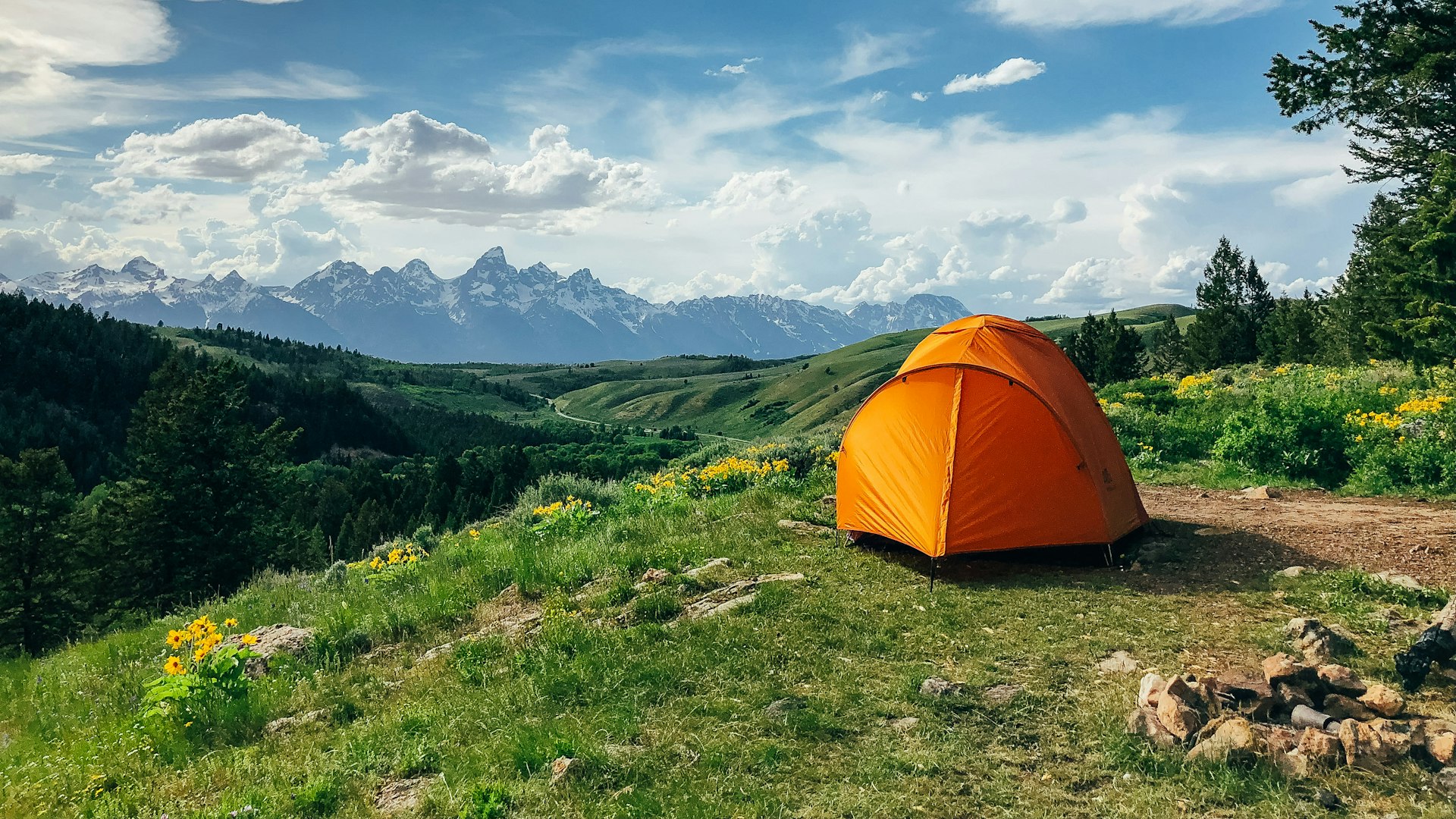
How to Choose a Tent: Capacity, Season Ratings and What They Hide
By the Outdoors Haven editors 7 min read Updated October 6, 2026
What changed: Expanded in October 2026 and re-checked against official sources such as the NPS, state agencies and manufacturers.
Pack this into your head
- Capacity ratings allow roughly 24 inches of width per sleeper, so size up for comfort
- Season ratings describe wind and snow strength, not warmth
- Three-season tents suit most camping; four-season tents are hotter and heavier
- A floor needs a higher waterproof rating than the fly because you kneel and lie on it
- Minimum weight leaves out stakes and stuff sacks; trail weight is always higher
- Aluminum poles outlast fiberglass, which is the usual failure on cheap tents
- Good two-person backpacking tents cost about $300 to $600 in 2026
On this route
- How tent capacity is measured
- Season ratings: what three- and four-season really mean
- Waterproof ratings: reading the millimeters
- Weight: minimum, packaged and real
- Livable space: height, walls, vestibules and doors
- Poles, fabric and freestanding designs
- Condensation, the leak that isn't
- How much to spend in 2026
- Before your first trip
To choose a tent, start by sizing up. A tent’s person rating assumes sleepers lying shoulder to shoulder on narrow pads with almost no room for gear, so two people are comfortable in a three-person car-camping tent. Then pick the season rating for the worst weather you’ll actually face, which for most people means three-season, and check the specs that change daily life: floor and fly waterproofing, peak height, vestibules, doors, pole material and, if you’ll carry it, the real trail weight.
Two numbers on the box mislead more than any others. The capacity rating describes how many bodies physically fit, not how many are comfortable, and the season rating describes strength against wind and snow, not warmth. Understand both and you avoid buying the wrong tent twice.
How tent capacity is measured
There’s no single US rule for what “two-person” means; each brand sets its own. The closest thing to a reference is the international standard ISO 5912:2020, which many European-market tents follow. It counts how many sleeping spaces fit on the inner tent floor without overlapping. For heavier tents, each space is a rectangle 200 by 60 centimeters, about 79 by 24 inches. For lightweight tents (2.5 kilograms or less per sleeper), it uses a tapered outline about 195 centimeters long and 58 centimeters wide at the shoulders.
Twenty-four inches is barely wider than a standard 20-inch sleeping pad, and many campers now use 25-inch wide pads. That’s why a tent can be accurately rated for two and still feel cramped for two.
| Tent rating | Comfortable for (car camping) | Typical backpacking use |
|---|---|---|
| 1-person | 1 adult, little gear inside | Solo hiker, gear in vestibule |
| 2-person | 1 adult plus gear, or 2 close friends | 2 hikers, standard choice |
| 3-person | 2 adults with gear | 2 hikers wanting space, or 3 friends |
| 4-person | 2 adults and 1 or 2 small children | Rarely carried |
| 6-person and up | A family of 4 with room for bags | Not for backpacking |
For backpacking, the extra weight of sizing up is real, so many pairs stay with a two-person tent and keep packs in the vestibules. For car camping, weight barely matters, so buy the space.
Season ratings: what three- and four-season really mean
Three-season tents cover spring, summer and fall. They use large mesh panels for ventilation, a rainfly for weather, and a pole design built for wind and rain but not for heavy snow piling on top. This is the right tent for the vast majority of camping, including frosty nights in the shoulder seasons.
Extended or “three-plus” season tents swap some mesh for solid fabric and add stronger pole structures. They suit high, exposed camps and late-fall trips.
Four-season tents are built to stand up under snow load and high wind, using more poles, steeper walls and less mesh. That makes them heavier, more expensive and noticeably hotter and stuffier in summer. MSR’s guide makes the same point: four-season designs earn their weight in constant heavy wind or snowstorms, while many shoulder-season trips only call for a three-season tent.
ISO 5912 uses a similar ladder. Its performance level 1 is for occasional fair-weather use, level 2 for moderate conditions including wet and windy weather, and level 3 for all weather, with mountaineering and snow loading as the examples. None of these levels describes warmth. A four-season tent is only slightly warmer than a three-season one; your sleeping bag and sleeping pad keep you warm. If you’re planning snow trips, the winter camping guide covers when a four-season tent is worth it.
Waterproof ratings: reading the millimeters
Tent fabric waterproofing is quoted as hydrostatic head: the height of a column of water, in millimeters, that the fabric holds back before water comes through, tested to ISO 811. Higher is more waterproof. ISO 5912 states its minimums in pascals; converted, they look like this:
| ISO 5912 level | Rainfly (coated) | Floor |
|---|---|---|
| Level 1, fair weather | about 1,530 mm | about 1,530 mm |
| Level 2, moderate weather | about 1,530 mm (lightweight) to 2,040 mm (heavier tents) | about 3,060 mm |
| Level 3, all weather | about 2,550 mm (lightweight) to 3,060 mm (heavier tents) | about 5,100 mm |
Two lessons follow. First, the floor matters more than the fly. Rain runs off a sloped fly, but you kneel, sit and lie on the floor, and that pressure pushes water through fabric that would shed a shower. Second, don’t chase the biggest number. A fly rated far above 3,000 mm is often heavier and stiffer without being noticeably drier, and leaks usually come from seams, zippers or a sagging pitch rather than the fabric.
Check that seams are factory taped or sealed. Silicone-coated nylon (often called silnylon or sil/PU) is lighter and stronger but usually needs its seams sealed by hand, and some ultralight tents ship that way on purpose.
Weight: minimum, packaged and real
Backpacking tents list two weights, and the difference matters. MSR defines minimum weight as the rainfly, tent body and poles only, and packaged weight as everything in the box, including stakes, stuff sacks and instructions. ISO 5912 uses “minimum usable weight” for the tent pitched with the fewest poles, pegs and guylines needed.
Your real carried weight sits between the two: minimum weight plus the stakes and guylines you’ll actually use, plus a footprint if you bring one. As a rough target, many backpackers aim for under about 3 pounds per person, so a two-person tent around 4 to 5.5 pounds packaged is a common middle ground. If you’ll be carrying the tent across portages on a first canoe trip, weight matters there too, though less than on a long hike.
Livable space: height, walls, vestibules and doors
Peak height and wall angle. Peak height tells you whether you can sit up. Steep, near-vertical walls give far more usable room than a tall center that slopes away quickly, which is why modern designs use pole hubs and spreader bars.
Floor area and shape. Compare square feet, then look at the shape. A rectangle uses space better than a floor that tapers sharply at the feet, especially for two people.
Vestibules. The covered area outside each door is where boots, packs and wet rain gear live. Generous vestibules make a tent feel a size larger.
Doors. Two doors for two people means nobody climbs over anybody at 2 a.m. It’s a small feature that matters every single night.
Poles, fabric and freestanding designs
Poles. Aluminum is lighter, stronger and far more durable than fiberglass. Fiberglass poles splinter and crack, and they’re the most common failure on budget tents. Carbon poles are lighter still but more fragile and pricey.
Fabric denier. Denier measures fiber thickness. Higher-denier fabrics are heavier and bulkier but more durable; MSR’s guide gives its Hubba Hubba 2 as an example, with 20-denier nylon on the fly and floor. Ultralight tents may use 7 to 15 denier and need more care, especially on the floor.
Freestanding or not. Freestanding tents stand on their poles alone and can be moved or pitched on rock and platforms. Semi-freestanding tents need a few stakes or guylines to reach full shape. Trekking-pole shelters save weight by using your hiking poles but need good staking and practice.
Double wall or single wall. Most tents are double wall: a breathable inner tent with a separate waterproof fly. They handle condensation better. Single-wall tents are lighter and quicker to pitch but tend to drip condensation in humid weather unless well ventilated.
Condensation, the leak that isn’t
Many “leaky” tents aren’t leaking. On cool, still nights, warm moist air from your breath condenses on the cold fly and drips onto you. Reduce it by opening vents and partly unzipping doors, pitching with the fly taut and clear of the inner tent, and choosing sites away from lakeshores and low meadows where cold, humid air pools. A breezy spot under trees usually has less condensation than an open clearing by water.
How much to spend in 2026
- About $80 to $200: fine for a few fair-weather weekends a year. Expect fiberglass poles on the cheapest models, modest waterproofing and heavier fabrics.
- About $200 to $400: the sweet spot for car and family camping. Aluminum poles, taped seams and a tent that lasts years.
- About $300 to $600: quality backpacking tents. MSR’s Hubba Hubba LT 2, for example, lists at about $550 on the maker’s site.
- Above that: specialist ultralight fabrics or true mountaineering designs.
The jump from $80 to $250 buys far more than the jump from $400 to $600. Spend where your use is: frequent backpackers should pay for weight and durability, occasional car campers for space and a good floor.
Before your first trip
Pitch it at home. Once in daylight, with nobody watching. Learning a new tent in the dark and rain is a bad introduction to the tent and to camping.
Check the seams. If they aren’t factory sealed, seal them before the first trip.
Add a footprint if you camp on rough ground, cut slightly smaller than the floor so it doesn’t collect rain.
Pick the site well. Use designated sites or durable surfaces like rock, gravel, sand and dry grass, at least 200 feet from lakes and streams, as the Leave No Trace principles recommend, and look up for dead branches before you stake. For everything else to bring, use the car camping checklist.
Last step: dry the tent fully before you store it, even after a single damp night. Mildew destroys coatings faster than years of use, and it’s the most common way a good tent dies in a garage.
Questions people ask
What size tent do I need for 2 people?
For car camping, a three-person tent. Two-person ratings assume two adults lying side by side on narrow pads with almost no room for bags or gear. For backpacking, a two-person tent is normal because you carry every ounce, but look for roughly 28 to 30 square feet of floor and a vestibule on each side so packs and boots can live outside the inner tent.
Do I need a four-season tent?
Only if you'll camp on snow, in high wind above treeline, or in winter storms. Four-season tents use more poles, steeper walls and less mesh to carry snow load, which makes them heavier, pricier and noticeably stuffier in summer. For spring, summer and fall camping, including frosty nights, a sturdy three-season tent is the better choice.
What does the waterproof rating on a tent mean?
It's the hydrostatic head: the height of a water column, in millimeters, that the fabric resists before leaking, measured with the ISO 811 test. The international tent standard ISO 5912 sets a minimum of about 1,500 mm for flies and up to about 5,100 mm for floors on its toughest level. Coating type, seam taping and design matter as much as the number.
Is a footprint necessary for a tent?
Not strictly, but it's cheap insurance. A footprint or groundsheet protects the floor from abrasion and sharp stones, and the floor is the hardest part of a tent to repair or replace. Keep it slightly smaller than the tent floor so it doesn't catch rain and channel water underneath you. Ultralight backpackers often skip it to save weight.
How much should I spend on a tent?
As of 2026, around $80 to $200 buys a usable car-camping tent for occasional fair-weather use, and $200 to $400 buys a durable family or car-camping tent with aluminum poles and better fabrics. Quality two-person backpacking tents typically run $300 to $600; MSR's Hubba Hubba LT 2, for example, lists at about $550. Specialist ultralight and mountaineering tents cost more.
Keep going
Next on the trail
Winter Camping for Beginners: Managing Moisture, Not Cold
Winter camping for beginners comes down to managing moisture and insulation underneath you. Dress lightly while moving so you don't soak your…
Oct 6, 2026 · 7 min
How to Plan Your First Canoe Trip: Route, Permits, Gear and Safety
Plan your first canoe trip on flat water, such as the Boundary Waters in Minnesota or Algonquin in Ontario, for two or…
Oct 6, 2026 · 7 min
Car Camping Checklist: Everything to Pack, and What First-Timers Forget
A car camping checklist covers six groups: shelter (tent, footprint, stakes, tarp), sleep (sleeping bag, pad, pillow), kitchen (stove, fuel, lighter, pots,…
Sep 29, 2026 · 7 min