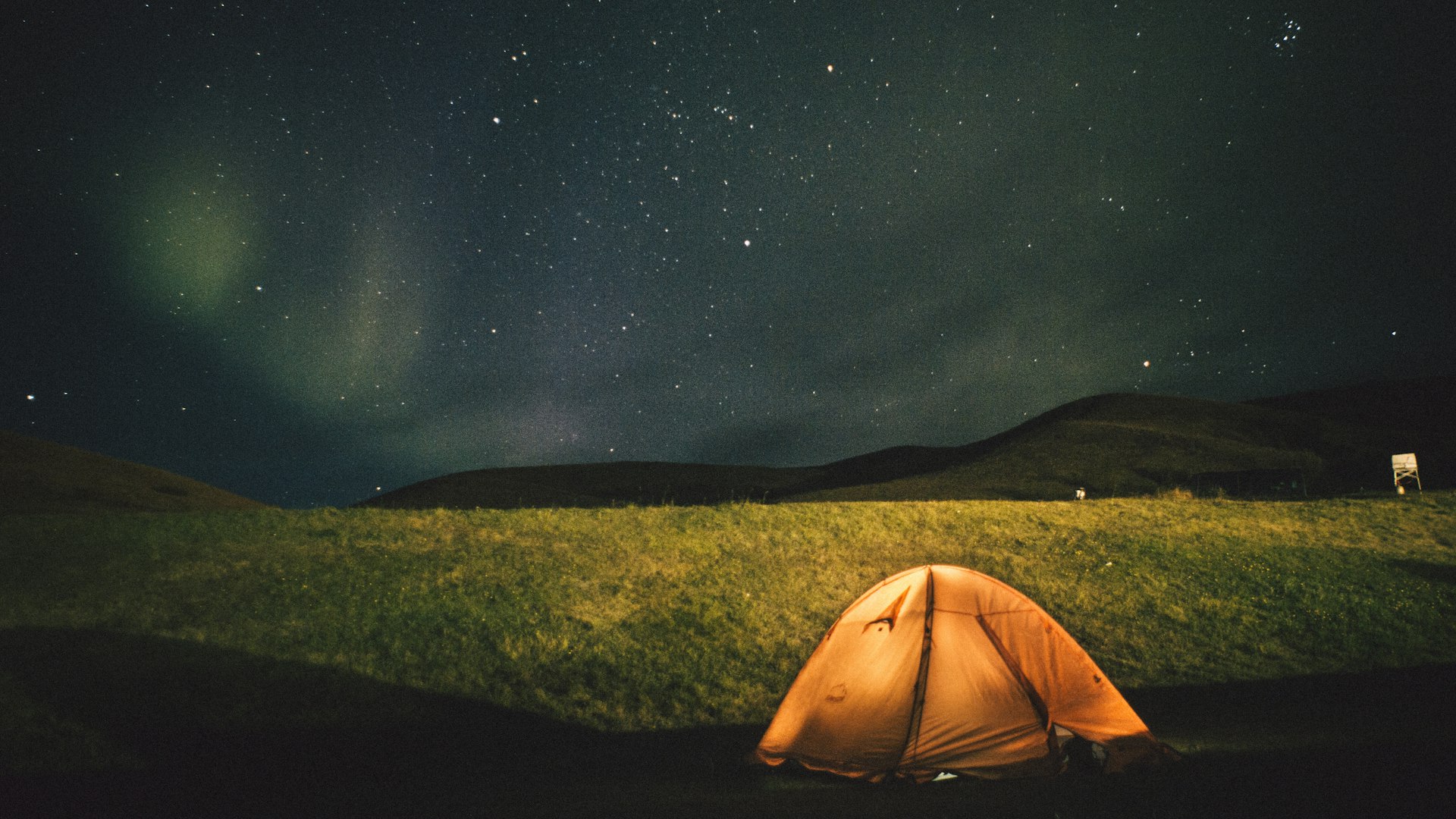
Sleeping Bag Temperature Ratings: What the Number Actually Means
By the Outdoors Haven editors 7 min read Updated October 6, 2026
What changed: Expanded in October 2026 and re-checked against official sources such as the NPS, state agencies and manufacturers.
Pack this into your head
- ISO 23537 gives each bag a comfort, limit and extreme temperature
- Most bag names use the limit rating; comfort is usually 6 to 13°F warmer
- Extreme is a hypothermia danger point, never a sleeping temperature
- The lab test uses a foam pad of about R 4.8, so thinner pads make ratings optimistic
- Cold sleepers should buy so the comfort rating matches the coldest expected night
- Ratings assume a dry bag, a base layer and a sheltered spot
- Quilts, kids' bags and expedition bags fall outside the standard's test
On this route
Sleeping bag temperature ratings come from a standardized lab test, ISO 23537, that gives each bag three numbers. The comfort rating is the lowest temperature at which you can sleep relaxed, on your back, without feeling cold. The limit rating is the lowest temperature at which you stay warm enough curled up in a ball. The extreme rating is a danger point where hypothermia is possible. Most US brands name their bags by the limit rating, so a “20°F bag” usually has a comfort rating close to 30°F.
That gap is why so many people decide their bag “doesn’t work.” Buy on the comfort number, check that your sleeping pad is as warm as the one the lab used, and the rating becomes a useful tool instead of a disappointment.
The three ISO 23537 numbers
The current standard is ISO 23537-1:2022, which replaced the 2016 edition. It grew out of the European EN 13537 standard, which Therm-a-Rest notes debuted in 2005 to replace the inconsistent ratings each brand used to invent for itself. The standard defines the numbers by posture:
- Comfort temperature (T comf): the lower limit at which a user lying relaxed, such as on their back, is in overall thermal balance and just at the threshold of feeling cold.
- Limit temperature (T lim): the lower limit at which a user curled up tightly is in thermal balance and at the threshold of feeling cold. You’ll sleep, but you’re working at it.
- Extreme temperature (T ext): a very low temperature where the risk of health damage from hypothermia is possible. The standard itself calls it a point of danger that can lead to death. It is not a sleeping temperature.
Older EN 13537 labels and many brand pages, including Therm-a-Rest’s explainer, describe comfort in terms of a “standard woman” and the limit in terms of a “standard man.” The idea is the same: comfort fits colder sleepers, limit fits warmer ones. The 2022 wording simply describes the posture rather than the person.
How the test works
Knowing the test conditions explains most real-world surprises. Under ISO 23537-1:2022:
- A heated, human-shaped thermal manikin, about 1.70 meters (5 feet 7 inches) tall, is dressed in a thin two-piece base layer and knee-length socks.
- It lies on a foam mattress with a thermal resistance of 0.85 m²·K/W, roughly R 4.8 in the units used for sleeping pad R-values, on a wooden board raised off the floor.
- The climate chamber sits around 10°C (50°F), plus or minus 5 degrees, with controlled air speed and humidity.
- The bag is dry-tumbled first so the insulation is fully lofted, and its zippers and hood are closed.
- The lab measures the bag’s thermal resistance, and a physiological model in the standard converts it into the three temperatures.
The standard covers adult bags with a limit temperature of -20°C (-4°F) or higher. It says the manikin test suits mummy-shaped bags, and it doesn’t apply to children’s bags, military bags or extreme expedition bags.
Which number is on the label
This is where most confusion starts. Many US brands put the limit rating in the product name. Therm-a-Rest, for example, says it names its bags by the limit rating, and its Boost 650 20F/-6C carries that number. A few brands lead with the comfort rating instead. Always find the full rating on the spec sheet or hang tag, which should show all three numbers.
The gap between comfort and limit isn’t fixed: it widens as bags get warmer. These are example results from the standard’s own lookup table, converted to Fahrenheit and rounded:
| Bag sold as (limit) | Comfort rating | Extreme (danger point) | Typical use |
|---|---|---|---|
| About 50°F | About 56°F | About 29°F | Warm summer nights, low elevations |
| About 40°F | About 47°F | About 14°F | Summer camping, mild shoulder season |
| About 30°F | About 38°F | About -1°F | Three-season use for warm sleepers |
| About 20°F | About 31°F | About -12°F | Three-season default, mountain summers |
| About 10°F | About 24°F | About -23°F | Late fall, early spring, high camps |
| About 0°F | About 15°F | About -37°F | Winter camping |
So the comfort rating runs roughly 6°F warmer than the limit on a summer bag and about 13°F warmer on a 0°F bag. Older guidance often quoted a flat 10 to 15 degree gap; the real figure depends on the bag.
How to pick the right rating
- Find the coldest realistic night. Look up overnight lows for the actual elevation and month, not the nearest town. A campground at 9,000 feet in Colorado can drop near freezing in July while Denver stays warm.
- Decide whether you sleep cold or warm. If you’re often the cold one in the tent, the comfort rating should be at or below that coldest night. Warm sleepers can shop closer to the limit rating.
- Add a margin. Wind, high humidity, a damp bag, fatigue and a thin pad all erode warmth. A few degrees of margin turns a borderline night into a fine one.
- Match the pad. If your pad is well below about R 4.8, the bag will feel colder than its rating. For three-season trips, aim for a pad around R 2 to 4, more as nights approach freezing.
- Consider one bag versus two. A single 20°F bag covers most three-season trips and can be unzipped on warm nights. A separate 40°F bag is lighter and more comfortable in midsummer.
Why you can be cold in a bag rated for the temperature
The pad. When you lie down, your weight crushes the insulation under you almost flat, so the pad does most of the work beneath you. The ISO test uses a pad of roughly R 4.8. Put the same bag on an R 1 foam mat or an uninsulated air mattress and you’ll feel the difference fast. That’s why the sleeping pad deserves as much attention as the bag, and why the sleeping pad R-value guide is the other half of this decision.
Moisture. Ratings assume a dry, fully lofted bag. Several nights of humid weather, condensation dripping from the tent fly, or sweat from getting into the bag overheated all reduce loft, especially for down.
Clothing and food. The manikin wears a thin base layer. Climbing in wearing damp hiking clothes, or going to bed hungry and already chilled, starts you behind. Dry base layers, a warm hat and a snack before bed help more than people expect; the layering guide covers what to sleep in.
Fit. A bag much bigger than you leaves cold air to heat. A bag too tight compresses the insulation. The hood and draft collar need to be cinched on cold nights, since your head and neck are the parts left exposed.
Shelter. The test is in still air. Wind through a three-season tent’s mesh, or sleeping under the stars, makes the same bag colder. A well-pitched tent with the fly on adds several degrees; see how to choose a tent for what season ratings mean.
If you’re cold and it’s getting worse, don’t push on. Shivering that won’t stop, clumsiness and confusion are early hypothermia signs; the hypothermia guide explains what to do.
Bags and quilts with no ISO rating
Some sleeping gear has no ISO number, and that isn’t automatically a red flag:
- Quilts don’t fit the mummy-bag manikin test well, so makers usually give their own ratings. Compare against a brand’s ISO-rated bags if it has any, and be more conservative.
- Expedition bags with limits below about -4°F fall outside the standard’s scope, so their ratings are the maker’s own.
- Children’s bags are excluded because there’s no validated physiological model for children. Buy a kids’ bag with plenty of margin and check on young campers during the night.
- Budget and big-box bags often carry an unexplained single number. Without the test behind it, assume it’s optimistic and look at the fill weight and loft instead.
Down, synthetic and fill power
Down is lighter and packs smaller for the same rating, and it lasts many years with care. It loses much of its warmth when wet and dries slowly. Fill power, typically 550 to 900, is how much volume an ounce of down fills; higher fill power gives the same warmth for less weight. Fill power alone doesn’t set the temperature rating, though. The total amount of fill and the bag’s design do.
Synthetic insulation is heavier and bulkier for the same rating but keeps more of its warmth when damp, dries faster and costs less. It also loses loft permanently over years of compression. For humid climates, canoe trips and beginners, it’s a forgiving choice. Down treated with a water-resistant finish narrows the gap but doesn’t close it.
Getting the most from your rating
- Shake the bag out as soon as camp is set so it can loft for an hour before bed.
- Change into dry sleep clothes and fresh socks, and wear a warm hat on cold nights.
- Eat a snack with some fat before bed and empty your bladder.
- Cinch the hood and draft collar so warm air doesn’t pump out each time you roll over.
- Vent a little if you sweat. Moisture in the insulation makes the rest of the night colder.
- Store it loose, in a large breathable storage sack or hung in a closet, never in its stuff sack. Long-term compression kills loft, and loft is what the rating measured.
For packing the rest of the sleep system on a car-camping weekend, the camping checklist covers pillows, pads and the extra blanket worth throwing in the trunk.
Questions people ask
What does a 20 degree sleeping bag mean?
On most US-market bags, 20°F is the ISO limit rating: the lowest temperature at which an adult curled up in the bag stays in thermal balance without feeling cold. The comfort rating, for sleeping relaxed on your back, is usually around 30°F. If you sleep cold, treat a 20°F bag as roughly a 30°F bag, and pair it with a pad of about R 4 or higher.
Should I go by the comfort or limit rating?
Use the comfort rating if you tend to sleep cold, are new to camping, or will be tired, damp or hungry at camp. Warm sleepers who curl up comfortably can shop closer to the limit rating. Either way, compare the coldest overnight low you realistically expect, not the average, and add a few degrees of margin for wind, humidity and a thinner pad than the test used.
How are sleeping bags rated?
Under ISO 23537-1, a lab places a heated, human-shaped manikin dressed in a thin base layer inside the bag, on a foam mat in a climate chamber. It measures how much heat the bag holds in, then a physiological model converts that thermal resistance into comfort, limit and extreme temperatures. The test replaced the older EN 13537 method, which dated from 2005.
What temperature sleeping bag do I need for summer camping?
For most US summer camping at low and middle elevations, a bag with a comfort rating around 45 to 55°F is enough, which typically means a bag sold as 35 to 45°F. Mountain campgrounds in the Rockies or Sierra often drop into the 30s even in July, so check the overnight forecast for the actual elevation and choose a warmer bag or add layers.
Why am I cold in my sleeping bag?
The usual causes are a label that shows the limit rather than the comfort rating, and a pad that insulates less than the roughly R 4.8 foam mat used in the lab test. Damp clothing, going to bed hungry or chilled, a loose hood and a bag that's too big also cost warmth. Fix the pad first, then layers and food.
Keep going
Next on the trail

How to Plan Your First Canoe Trip: Route, Permits, Gear and Safety
Plan your first canoe trip on flat water, such as the Boundary Waters in Minnesota or Algonquin in Ontario, for two or…
Oct 6, 2026 · 7 min
Campfire Cooking Basics: Cook Over Coals, Not Flames
Good campfire cooking happens over coals, not flames. Light the fire 30 to 45 minutes before you want to eat so it…
Oct 6, 2026 · 8 min
Winter Camping for Beginners: Managing Moisture, Not Cold
Winter camping for beginners comes down to managing moisture and insulation underneath you. Dress lightly while moving so you don't soak your…
Oct 6, 2026 · 7 min