Expedition Cruises for First-Timers: Antarctica, the Arctic and the Galápagos Compared
By the Outdoors Haven editors 8 min read Updated October 6, 2026
What changed: Expanded in October 2026 and re-checked against official sources such as the NPS, state agencies and manufacturers.
Pack this into your head
- Expedition ships carry roughly 100 to 200 guests and land by Zodiac, not at ports
- Antarctic rules allow at most 100 passengers ashore at once and no landings from ships over 500
- The Galápagos is the gentlest first trip; Antarctica the most demanding
- Antarctica runs November to March, Svalbard roughly May to September, the Galápagos year-round
- Galápagos visitors pay a $200 park entry fee on arrival
- Svalbard rules since 2025 require 300 meters from polar bears, 500 meters from March to June
- Itineraries change daily with weather and ice; flexibility is part of the trip
On this route
For a first expedition cruise, the Galápagos is the easiest place to start: warm weather, short flights from mainland Ecuador, mostly calm water, and roughly $4,500 to $12,000 per person for 5 to 9 days in 2026. Svalbard, in the Norwegian Arctic, suits travelers who want polar bears, walrus and the midnight sun, at about $6,500 to $14,000. Antarctica is the biggest, longest and priciest of the three, typically $9,000 to $20,000 or more, with a two-day crossing of the Drake Passage each way.
All three run on small ships that land guests by inflatable Zodiac boats at beaches with no dock, guided by naturalists. The right choice depends less on which is “best” than on how much travel, cold, sea motion and money you’re ready for.
How an expedition cruise differs from a regular cruise
- Small ships. Most carry roughly 100 to 200 guests rather than thousands. In Antarctica size has legal consequences: under the visitor guidelines adopted through the Antarctic Treaty system, ships with more than 500 passengers can’t land anyone at all.
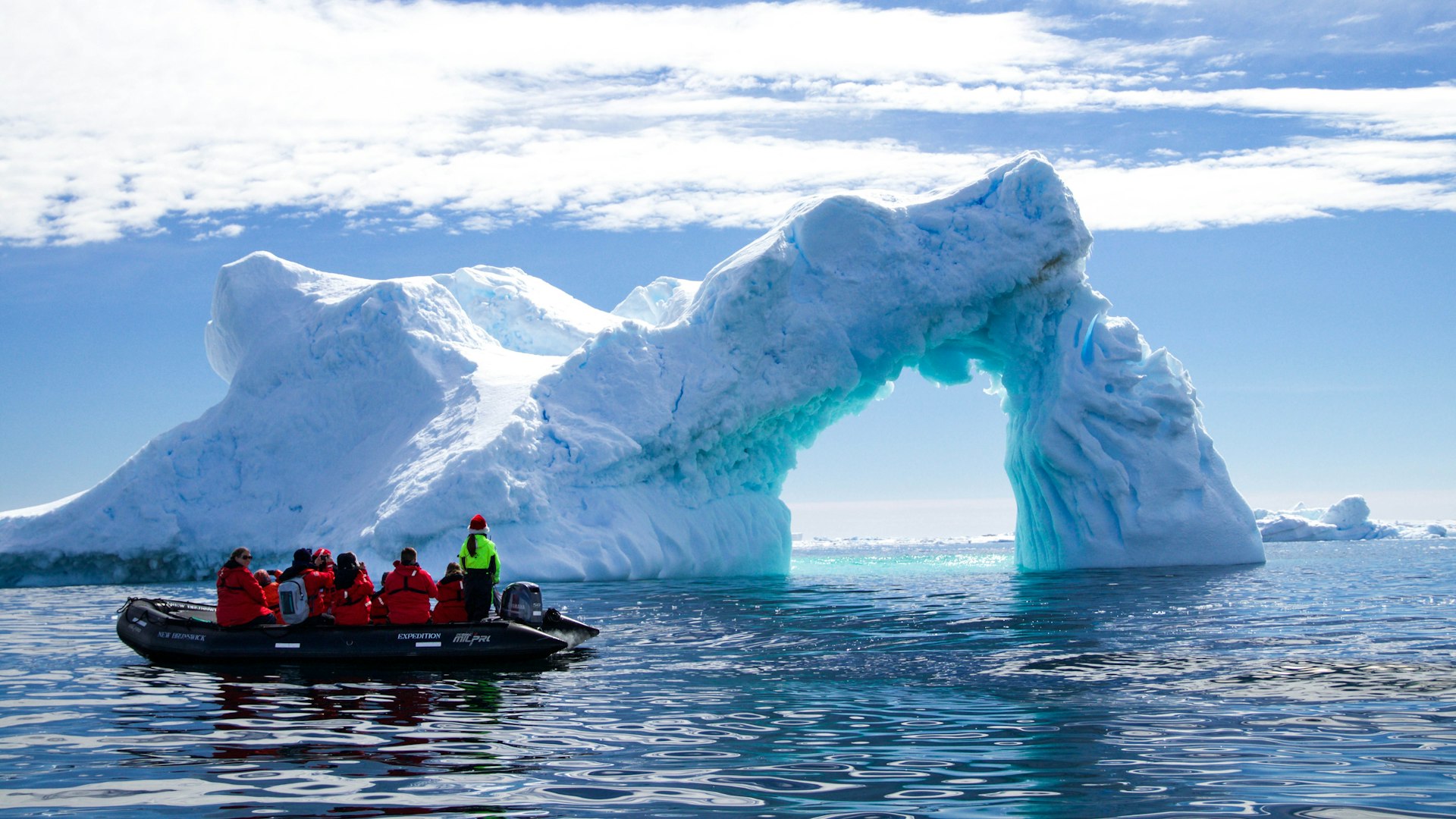
- Landings instead of ports. You go ashore by Zodiac, often twice a day, at places with no town, no pier and often no other people.
- A plan, not a promise. The expedition leader reroutes daily around weather, ice and wildlife. A landing you were looking forward to may be swapped for a Zodiac cruise among icebergs, or for nothing at all on a stormy day.
- Naturalist staff. Biologists, geologists, glaciologists and historians give talks on sea days and guide every landing.
- Early, full days. A 6 a.m. wake-up call because whales are off the bow is part of what you paid for.
Antarctica, the Arctic and the Galápagos compared
| Galápagos | Arctic (Svalbard) | Antarctica (Peninsula) | |
|---|---|---|---|
| Season | Year-round | About May to September | November to March |
| Usual gateway | Fly Quito or Guayaquil to Baltra or San Cristóbal | Longyearbyen, often via Oslo | Ushuaia, Argentina; fly-cruises via Punta Arenas, Chile |
| Typical length | 5 to 9 days | 8 to 15 days | 10 to 12 days; 18 to 21 with South Georgia |
| Price per person, 2026 | About $4,500 to $12,000 | About $6,500 to $14,000 | About $9,000 to $20,000+ |
| Signature wildlife | Sea lions, marine iguanas, giant tortoises, boobies, snorkeling with turtles | Polar bears, walrus, Arctic fox, reindeer, seabird cliffs | Penguin colonies, seals, humpback and minke whales |
| Sea conditions | Mostly calm, choppier June to November | Mostly sheltered fjords and coasts | Two open-ocean days each way across the Drake |
| Weather | Warm, 70s to 80s °F | Around freezing to the 40s °F | Around freezing, wind and snow possible |
Prices are typical “from” fares for shared cabins quoted by operators for 2026 and 2027 departures. They vary with ship age, cabin, season and itinerary length, and they rarely include flights to the gateway.
The Galápagos
The friendliest first expedition. Flights from the mainland are short, the climate is warm, and the animals show little fear of people. The largest ships here carry around 100 guests, Celebrity Flora among them, and many yachts carry 16 to 40. December to May brings warmer water and calmer seas; June to November is cooler and choppier, with richer seas and busy seabird colonies. It’s also the best of the three for families with children who can follow rules.
The Arctic: Svalbard and Greenland
Svalbard is the best single bet for polar bears, typically seen along the sea-ice edge and coasts, plus walrus haul-outs, seabird cliffs and 24-hour daylight in high summer. Sightings are never guaranteed. Greenland voyages, usually July to September, add vast fjord systems, icebergs and small Inuit settlements, but fewer bears. Getting to Longyearbyen from the US usually means a connection through Oslo.
Antarctica
Penguin colonies of thousands, icebergs the size of buildings and a scale no photo prepares you for. Most voyages leave from Ushuaia, Argentina, and Quark Expeditions, for example, schedules two days across the Drake Passage each way on its 11 to 12 day classic itinerary. Fly-cruises skip the crossing by flying from Punta Arenas, Chile, to King George Island, at a higher price and with weather-delay risk. Early season (November) brings fresh snow and penguin courtship, midseason (December and January) chicks and the longest days, and late season (February and March) the best whale watching.
The rules that shape your trip
Each destination has strict visitor rules, and they explain why expedition cruising works the way it does.
Antarctica. Under the General Guidelines for Visitors to the Antarctic, published by the operators’ association IAATO:
- A maximum of 100 passengers may be ashore from a ship at one time, and only one ship may visit a site at once.
- Ships with more than 500 passengers may not land anyone.
- Landings keep a ratio of one guide to every 20 passengers.
- Stay at least 5 meters (about 15 feet) from wildlife on land, and 15 to 25 meters from fur seals where practical.
- Clean boots, Velcro, pockets and gear to stop seeds and soil reaching Antarctica, and between landing sites. Expect a vacuuming session on board.
- No drones near wildlife, no souvenirs of any kind: not a pebble, feather or bone.
The 100-ashore rule is why ship size matters so much: a 100-guest ship can land everyone together, while a 200-guest ship rotates groups.
Svalbard. New rules took effect on January 1, 2025, according to the Governor of Svalbard. Visitors must stay at least 300 meters from polar bears, and 500 meters from March 1 to June 30. Boats must keep at least 150 meters from walrus haul-outs. In the national parks, ships calling may carry no more than 200 passengers, and in most protected areas tourist landings are allowed only at mapped sites, with a guide, with limits on how many people are ashore. Drones are banned in protected areas.
Galápagos. The Galápagos National Park’s visitor rules require visiting protected sites with a licensed naturalist guide, staying on marked trails, keeping 2 meters (6 feet) from wildlife, including your camera, no flash photography, no drones, and no touching or feeding animals. Foreign visitors over 12 pay a $200 park entry fee, and children under 12 pay $100, collected at Baltra and San Cristóbal airports.
These rules follow the same logic as the Leave No Trace principles on any trail at home, just enforced more strictly.
What it costs and what’s included
Fares look steep next to mainstream cruising, but they usually cover more. Most expedition fares include all landings and Zodiac cruises, meals, lectures, and on polar trips loaned waterproof boots and often a parka to keep. Quark, for instance, lists a parka and loaned expedition boots on its Antarctic voyages.
Usually extra:
- Flights to Ushuaia, Longyearbyen or the Galápagos, and often a hotel night before boarding.
- Park and entry fees, such as the Galápagos $200 fee.
- Gratuities, unless the fare says they’re included.
- Optional activities like sea kayaking, camping ashore or snowshoeing, often sold separately and in limited numbers. If you’ve never paddled, our canoe vs kayak guide explains what a kayak outing involves.
- Travel insurance with medical evacuation coverage, which polar operators commonly require.
Ways to pay less: travel at the edges of the season, take a triple or quad cabin, choose an older ship with the same landing program, or watch operators’ published offers, which on some polar departures take thousands off the brochure fare.
Choosing a ship
In expedition cruising, smaller is usually better ashore. Ask these questions of any ship:
- How many passengers? Under 100 for Antarctica means everyone lands together.
- How many Zodiacs and guides? More boats mean faster landings and more time ashore.
- How many landings or outings a day does it average? Two is typical when weather allows.
- What ice class and stabilizers? Relevant for polar routes and the Drake.
- What’s the onboard medical setup? You’ll be days from a hospital.
Cabin choice matters less than on a regular cruise. You’ll mostly use your cabin to sleep and change layers. Put money toward a longer itinerary or a smaller ship rather than a bigger suite.
Seasickness, fitness and who it suits
You don’t need to be young or athletic. You do need to step into a bobbing Zodiac with crew help, manage wet landings in shallow surf, and walk a mile or two on rock, gravel or snow. If that’s hard, ask the operator about Zodiac-only options before booking.
Seasickness is the main physical question for Antarctica. The Drake can be calm or rough for a day or more. Talk to your doctor before the trip about prevention options rather than improvising on board, and choose a midship, lower-deck cabin if you’re prone to it, where motion is gentlest.
Expedition cruising suits people who are curious and flexible and happy to trade formal nights for wet landings. It doesn’t suit anyone who needs a fixed schedule, nightlife or constant internet. If what you really want is close-up big wildlife with less travel, a guided trip in the US may fit better; see Alaska bear viewing for brown bears on a much shorter trip. And if the real goal is a big all-inclusive trip the whole family will enjoy, a week on a guest ranch costs far less; see what a family dude ranch week really costs.
When to book and what to pack
Peak weeks fill first: late December and January in Antarctica, July in Svalbard, and holiday weeks in the Galápagos. Many travelers book a year or more ahead for those, while shoulder dates often stay open longer. Choose the destination first, then the season within it, then the ship.
Pack for layers rather than bulk, because you’ll be warm in a Zodiac in the sun and chilled in wind minutes later. For polar trips that means a base layer, fleece or light insulation, the operator’s parka or your own shell, and fully waterproof rain pants, which matter more than any jacket when you sit on a wet Zodiac tube. The layering guide covers fabrics. Add sunglasses and strong sunscreen for snow glare, binoculars, and dry bags for cameras.
One last tip for any destination: bring twice the camera storage and spare batteries you think you’ll need, and keep batteries in an inside pocket on polar landings. Cold drains them fast, and the best wildlife moment usually happens at the end of a long day.
Questions people ask
Which expedition cruise is best for first-timers?
For most people, the Galápagos. Flights from mainland Ecuador are short, the water is mostly calm, the weather is warm, and the wildlife is easy to see at close range. Trips also cost less than polar voyages. Choose Svalbard if polar bears and walrus are the dream, and Antarctica if you're ready for longer travel, rougher seas and the highest price.
How much does an Antarctica expedition cruise cost?
As of 2026, a classic 10 to 12 day Antarctic Peninsula voyage from Ushuaia typically costs about $9,000 to $20,000 per person in a shared cabin, with the lowest fares in triples on older ships and luxury lines well above. Trips adding the Falklands and South Georgia run roughly $15,000 to $30,000. Flights to Argentina, travel insurance and tips are usually extra.
Is the Drake Passage really that rough?
It can be. The Drake is open ocean between South America and Antarctica, and most voyages spend about two days crossing each way. Some crossings are calm, others bring large swells for a day or more. Talk to your doctor about seasickness medication before you go, and consider a fly-cruise that flies from Punta Arenas, Chile, to King George Island instead.
Do you need to be fit for an expedition cruise?
You don't need to be athletic, but you need to manage steps into a moving Zodiac with crew help, wet landings in shallow water, and walks of a mile or two on uneven, sometimes slippery ground. Many guests are in their 60s and 70s. Ask the operator about mobility requirements, and expect a medical form before polar trips.
When is the best time to go to the Galápagos?
There's no bad month. December to May is warmer, sunnier between showers and usually calmer at sea, good for snorkeling. June to November brings cooler, misty weather and choppier water, but richer seas and very active wildlife, including seabird breeding. Holiday weeks and July and August book up first, so plan ahead for those.
Keep going
Next on the trail
Family Dude Ranch Vacations: What a Week Really Costs and How to Pick the Right Ranch
A family dude ranch vacation usually means a week of all-inclusive lodging, meals and daily horseback riding. Rates published in 2026 run…
Oct 6, 2026 · 7 min

National Park Pass Guide 2026: Prices, Free Passes and Reservations
As of 2026, the America the Beautiful annual national park pass costs $80 for US citizens and residents and $250 for nonresidents.…
Sep 29, 2026 · 8 min
Alaska Bear Viewing: Where to Go, When, and What Trips Cost
The best Alaska bear viewing is at Brooks Falls in Katmai National Park in July and September, on the Lake Clark and…
Oct 6, 2026 · 9 min