The 7 Leave No Trace Principles, Explained With Real Trail Examples
By the Outdoors Haven editors 7 min read Updated September 29, 2026
Pack this into your head
- Leave No Trace has seven principles, set out by the Leave No Trace Center for Outdoor Ethics.
- Camp and wash at least 200 feet from lakes and streams.
- Dig catholes 6 to 8 inches deep and 200 feet from water, camp and trails.
- Pack out all trash, including food scraps and toilet paper.
- Walk through mud in the middle of the trail rather than around it.
- Yellowstone requires 100 yards from bears and wolves, 25 yards from other animals.
On this route
The seven Leave No Trace principles are: plan ahead and prepare; travel and camp on durable surfaces; dispose of waste properly; leave what you find; minimize campfire impacts; respect wildlife; and be considerate of other visitors. They come from the Leave No Trace Center for Outdoor Ethics, and federal land agencies use them as the standard for behavior on public land.
In practice they boil down to a handful of habits: camp and wash at least 200 feet from water, bury human waste in 6 to 8 inch catholes, pack out every scrap of trash and toilet paper, keep fires small or skip them, and give animals room. Each principle is explained below with the specific numbers and the mistakes beginners make most often.
1. Plan ahead and prepare
Most damage outdoors starts with a planning problem. People who run out of daylight cut switchbacks, people who didn’t check the rules build fires during a ban, and groups that are too big trample a meadow flat because there’s nowhere else to put six tents.
The NPS summary of the principles recommends knowing the regulations and special concerns for the area, preparing for extreme weather and emergencies, visiting outside peak times, keeping groups small, repackaging food to cut waste, and using a map and compass or GPS instead of marking paint, cairns or flagging.
What that looks like before a trip:
- Read the park or forest’s regulations page. Fire rules, food storage orders, permit requirements and group size limits differ widely.
- Check the forecast and plan a turnaround time.
- Take food out of bulky boxes and into reusable bags so there’s less trash to carry.
- Go midweek or early in the morning at popular places like Zion’s Angels Landing or the Mist Trail in Yosemite.
- Carry a map and know how to use it. Our guide on how to read a topographic map covers the basics.
2. Travel and camp on durable surfaces
Durable surfaces are those that don’t show wear: maintained trails, designated campsites, rock, gravel, sand, dry grass and snow. Fragile ones are meadows, desert crust, wetlands and alpine plants, which can take decades to recover from a few careless footsteps.
On the trail
Walk single file in the middle of the trail, even when it’s wet or muddy. Stepping around a puddle widens the trail, and after a season of that the path becomes a muddy strip three times its original width. Wear waterproof boots or accept wet feet. Don’t cut switchbacks, which starts erosion gullies.
In camp
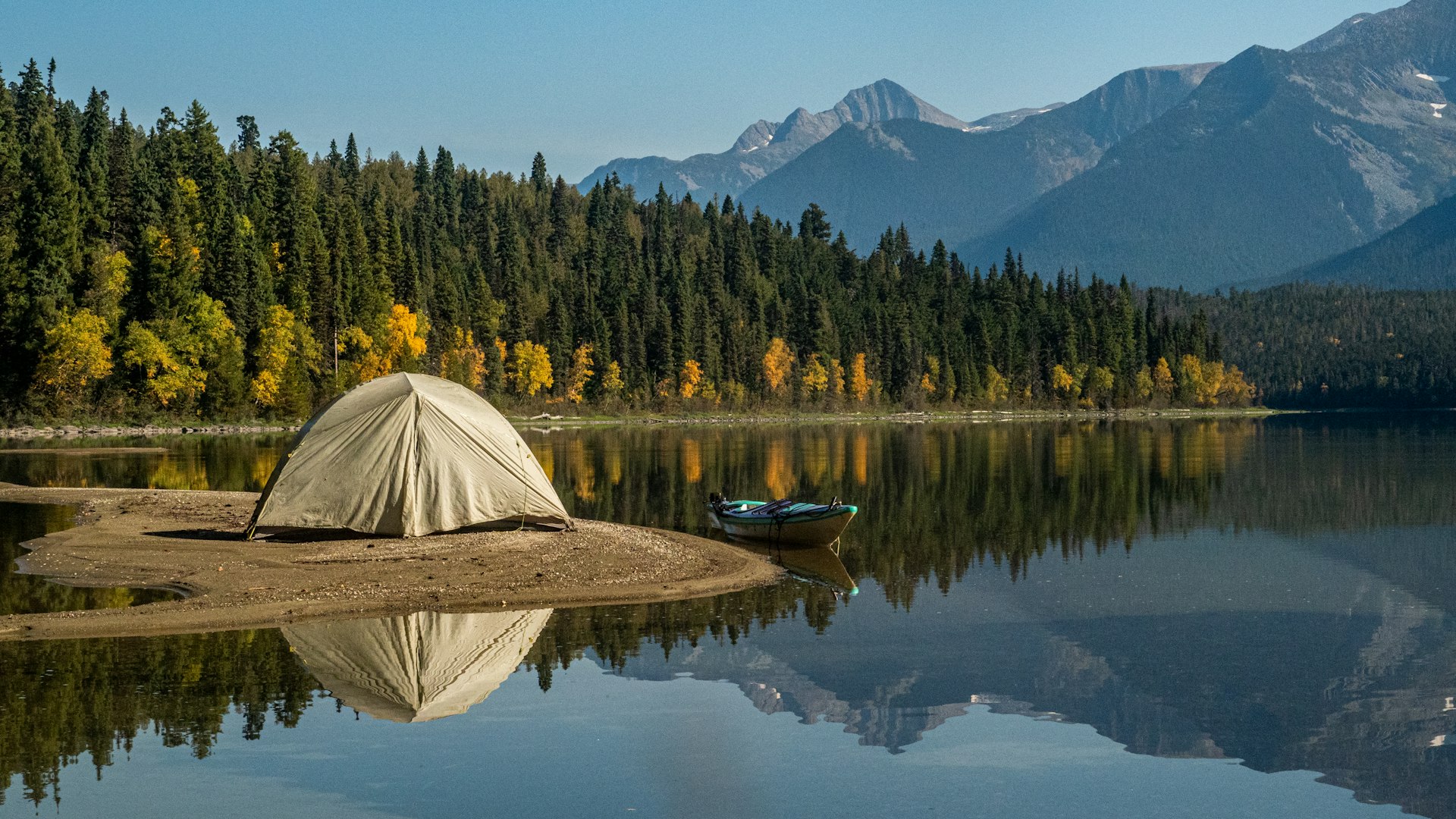
- Camp at least 200 feet from lakes and streams, about 70 adult steps.
- Good campsites are found, not made. Don’t dig trenches, clear plants or move rocks.
- In popular areas, use existing campsites and keep your footprint inside the already-bare area.
- In pristine areas with no sites, spread out, move camp each night and avoid spots where impact is just beginning.
In desert parks such as Canyonlands and Arches, stay off the dark, knobby biological soil crust, a living layer that holds the soil together. Walk in washes, on slickrock or on the trail. A tent that fits the available bare ground matters here; see how to choose a tent for footprint sizes.
3. Dispose of waste properly
“Pack it in, pack it out” applies to everything you bring: wrappers, food scraps, fruit peels, twist ties, tape from blister care and used toilet paper. Before you leave a rest stop or campsite, walk it once looking for crumbs and micro-trash.
Human waste
Use a toilet or outhouse wherever there is one. Otherwise, the NPS and Leave No Trace guidance is:
- Walk at least 200 feet from water, camp and trails.
- Dig a cathole 6 to 8 inches deep with a small trowel.
- Use it, fill it with the original soil and disguise the spot.
- Pack out toilet paper and hygiene products in an opaque bag.
Some places have too many visitors, or too little soil, for catholes to work. In the Mount Whitney Zone in California, for example, hikers must carry out their human waste in waste bags. River trips through the Grand Canyon carry portable toilets. Check the rules; in these areas a bag is required, not optional.
Washing
Carry water 200 feet from the lake or stream to wash dishes or yourself. Use only a small amount of biodegradable soap, strain food bits out of dishwater and pack them out, then scatter the water. Even “biodegradable” soap harms aquatic life if it goes straight into a creek. Good kitchen habits also protect the water you’ll drink later; see how to purify water backpacking.
4. Leave what you find
Take photos, not souvenirs. The principle covers natural objects (rocks, flowers, antlers, shells, petrified wood) and cultural ones (arrowheads, pottery shards, old mining equipment, rock art). Removing archaeological items from federal land is illegal, and touching rock art leaves skin oils that damage it.
- Don’t build structures, furniture or rock walls at campsites.
- Don’t carve trees or rocks.
- Don’t stack rocks or build cairns. Unofficial cairns mislead hikers where rangers use official ones to mark routes, as on the granite summits of Acadia National Park.
- Don’t move firewood, plants or dirt between regions. Invasive insects such as the emerald ash borer travel in firewood, which is why many states restrict bringing it in. Buy it near where you’ll burn it.
- Clean mud and seeds off boots and boats between trips.
5. Minimize campfire impacts
Fires leave scars that last for years: blackened rocks, trampled wood-gathering areas and stripped trees. Leave No Trace suggests a lightweight stove for cooking and a lantern for light, and treating a fire as an occasional extra rather than the center of every trip.
Where fires are allowed and you choose to have one:
- Use an established fire ring, fire pan or mound fire.
- Keep it small.
- Burn only dead and downed wood you can break by hand. No sawing branches off standing trees, dead or alive.
- Burn everything to ash, drown it, stir and drown again until it’s cool to the touch, then scatter cool ashes.
Always check current fire restrictions. Many national forests and parks in the West ban campfires in summer and fall, and some areas ban them above a certain elevation year-round. Our guide to campfire cooking basics explains how to cook on coals with a small, controlled fire where fires are allowed.
6. Respect wildlife
Observe animals from a distance and never follow, approach or feed them. Feeding wildlife damages their health, changes their behavior and exposes them to predators and traffic. Animals that learn to seek human food, from chipmunks to bears, often end up being removed or killed.
| Situation | What to do |
|---|---|
| Bears, wolves and cougars in Yellowstone | Stay at least 100 yards away (the length of a football field) |
| Bison, elk and all other animals in Yellowstone | Stay at least 25 yards away |
| Any animal changes behavior because of you | You’re too close; back off |
| Mating, nesting, raising young or winter | Avoid the area; animals are most stressed then |
| Food, trash and scented items | Store in lockers, bear canisters or hangs as local rules require |
| Pets | Keep leashed and under control, or leave them home |
Those distances come from Yellowstone’s safety rules, and many other parks use similar figures. A simple check: hold your arm out and raise a thumb. If you can’t cover the whole animal with your thumb, you’re too close. Use binoculars or a zoom lens instead of walking closer.
In bear country, proper food storage protects the bears as much as you. See how to use bear spray for storage rules, and the Alaska bear viewing guide for how guided viewing keeps a safe distance. Dogs can chase and stress wildlife in seconds, which is one reason so many parks restrict them; hiking with dogs covers the rules.
7. Be considerate of other visitors
The last principle is about people. Everyone on the trail came for something, and for many it’s quiet.
- Yield correctly. Hikers going downhill yield to those coming up. Bikers yield to hikers, and everyone yields to horses and pack stock.
- Step to the downhill side when horses or mules pass, and talk quietly so the animals know you’re a person.
- Keep the noise down. Skip the Bluetooth speaker. Use earbuds if you want music, and keep voices low in camp.
- Take breaks off the trail on a durable spot so others can pass.
- Camp out of sight and sound of trails and other campers where the rules allow.
Applying Leave No Trace on your first trips
Nobody gets every principle right on day one. The ones that make the biggest difference for beginners are also the easiest: pack out every bit of trash and toilet paper, stay on the trail through the mud, and keep your distance from animals. Add a trowel, a trash bag and a small bag for scraps to your day hike pack and they’ll become automatic.
On lake trips, the same principles apply with water in the middle: pick established sites, wash 200 feet back from shore and pack out everything, as covered in how to plan your first canoe trip.
The simplest test when you leave a campsite or viewpoint: could the next person tell you were there? If the answer is no, you followed the principles, and the place will look the same for them as it did for you.
Questions people ask
What are the 7 Leave No Trace principles?
The seven principles are: plan ahead and prepare; travel and camp on durable surfaces; dispose of waste properly; leave what you find; minimize campfire impacts; respect wildlife; and be considerate of other visitors. They were developed by the Leave No Trace Center for Outdoor Ethics, building on work by the Forest Service, National Park Service and Bureau of Land Management in the 1980s, and they apply from city parks to remote wilderness.
Is it OK to throw food scraps like apple cores or orange peels in the woods?
No. Leave No Trace says to pack out all trash and leftover food, and that includes biodegradable scraps such as apple cores, banana and orange peels, and pistachio shells. They take a long time to break down in dry or cold climates, look like litter to the next visitor, and teach birds, rodents and bears to associate trails with food. Carry a zip-top bag for scraps.
How far from water should you camp?
Camp at least 200 feet from lakes and streams, which is roughly 70 adult steps. The same 200-foot distance applies to catholes for human waste and to washing dishes or yourself with soap. Many parks and forests set their own rules, sometimes stricter, and some require camping only in designated sites, so check the regulations for your area when you plan the trip.
Can you build rock cairns on a hike?
No, you shouldn't. Leave No Trace asks hikers to leave rocks as they find them and to navigate with a map, compass or GPS rather than building markers. Extra cairns can lead other hikers off route, especially where land managers use official cairns to mark trails across rock, as on Acadia's summits. Moving rocks also disturbs small animals and plants that live under them.
Is toilet paper biodegradable enough to bury?
Leave No Trace and the National Park Service say to pack out toilet paper and hygiene products rather than bury them. Buried paper breaks down slowly, especially in dry and cold places, and animals dig it up. Carry an opaque bag for used paper. Some high-use areas, such as the Mount Whitney Zone in California, go further and require hikers to pack out human waste itself in waste bags.
Keep going
Next on the trail
How to Layer Clothes for Hiking: Base, Mid and Shell by Season
To layer clothes for hiking, wear a base layer of merino wool or synthetic fabric that moves sweat off your skin, add…
Sep 29, 2026 · 7 min
How to Read a Topographic Map: Contours, Scale and Trail Steepness
To read a topographic map, look at the brown contour lines: each connects points of equal elevation, and the contour interval in…
Sep 29, 2026 · 8 min
How Far Can You Hike in a Day? Realistic Miles by Fitness and Terrain
Most beginners can comfortably hike 5 to 8 miles in a day on moderate trails, regular hikers 8 to 15 miles, and…
Sep 29, 2026 · 7 min