What to Pack for a Day Hike: The Ten Essentials and a Practical Checklist
By the Outdoors Haven editors 7 min read Updated October 6, 2026
What changed: Expanded in October 2026 and re-checked against official sources such as the NPS, state agencies and manufacturers.
Pack this into your head
- The NPS Ten Essentials are the minimum for any hike, even a short one
- About 2 liters of water covers a mild full day; heat can demand far more
- A headlamp matters most when a three-hour walk turns into six
- Carry a paper map as backup; phones die, break and lose signal
- A 15 to 30 liter pack fits everything a day hike needs
- Leave a trip plan with someone who is not hiking with you
On this route
What to pack for a day hike comes down to the Ten Essentials the National Park Service recommends: navigation, sun protection, extra clothing, a headlamp, first aid supplies, a fire starter, a knife and repair kit, extra food, water with a way to treat more, and an emergency shelter such as a space blanket. All of it fits in a 15 to 30 liter pack, and on a short trail it weighs a few pounds. Then tell someone your route and when you expect to be back.
Most people get the day-hike pack wrong in one of two directions: a phone and a bottle of water, or a pack loaded as if for three days. The useful version sits between the two and is built around one question: what happens if this takes longer than planned? A twisted ankle, a missed junction or a thunderstorm can turn a three-hour walk into a six-hour one, and the Ten Essentials exist for those hours.
The Ten Essentials, and what each means on a day hike
The NPS Ten Essentials list is the standard used across national parks, and the park service describes it as the minimum everyone should carry. Here is each item scaled to a day on the trail.
| Essential | What the NPS lists | Day-hike version |
|---|---|---|
| Navigation | Map, compass, GPS | Paper map of the area, a baseplate compass, offline map on your phone |
| Sun protection | Sunglasses, sunscreen, hat | Brimmed hat, SPF lip balm, small sunscreen tube |
| Extra clothing | Jacket, hat, gloves, rain shell, layers | Rain shell plus one warm layer, light hat and gloves above treeline |
| Illumination | Flashlight, headlamp | Headlamp with fresh or spare batteries |
| First aid supplies | A kit suited to the trip | Small pouch with blister care, dressings, tape, pain relief, tweezers |
| Fire | Matches or lighter, fire starters | Lighter and a few fire-starter cubes in a zip bag |
| Repair kit and tools | Duct tape, knife, multi-tool, scissors | Small knife or multi-tool, a few feet of duct tape wrapped on a pole |
| Nutrition | Extra food | Lunch plus one spare bar or bag of trail mix that stays in the pack |
| Hydration | Water and water treatment | About 2 liters for a mild full day, plus a filter or tablets |
| Emergency shelter | Tent, space blanket, tarp or bivy | Space blanket or emergency bivy, a few ounces |
The NPS also asks hikers to check the specific park’s requirements before they leave and to carry extra batteries for any device they depend on.
How much water to carry
About 2 liters is a reasonable starting point for a full day in mild weather. Shorter hikes need less, and heat, altitude and steep climbing all push the number up fast. In summer the Grand Canyon’s hike smart guidance warns that hikers can lose one to two quarts of water per hour, recommends salty snacks such as pretzels or crackers to replace electrolytes, and advises staying off the trails between 10 a.m. and 4 p.m.
Dehydration affects judgment before you feel thirsty, which is why the NPS advice is to drink often and before thirst arrives. Two practical habits help:
- Keep water where you can reach it while walking. A bottle in a side pocket or a hose from a reservoir gets used. A bottle buried in the pack does not.
- Carry treatment if the route passes water. A squeeze filter or a few purification tablets weigh almost nothing and mean you do not have to carry the whole day’s supply. Our guide to purifying water on the trail compares filters, tablets, UV and boiling.
Food: lunch plus a spare
Pack what you plan to eat and one thing you do not plan to eat. The spare is calorie-dense, does not spoil, and lives permanently in the pack: a bar, a bag of nuts, a packet of nut butter. On a normal day it comes home untouched. On a long day it is what keeps you thinking clearly on the descent.
Salty food matters as much as calories in hot weather. In bear country, keep food sealed and never leave it unattended at a viewpoint or on a rock while you take photos.
Clothing and footwear
The extra clothing essential is specifically a waterproof shell and an insulating layer. A summit is colder and windier than the parking lot, and you cool down quickly the moment you stop to eat. Skip cotton: a cotton T-shirt soaked with sweat stays wet and cold for hours. Synthetic or wool base layers dry far faster. Our guide to layering clothes for hiking explains what to wear by season and effort.
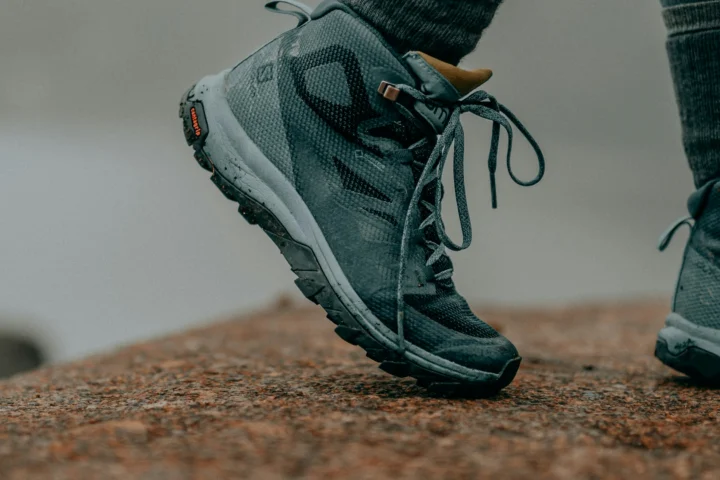
Footwear should match the trail, and it should be broken in before a long day. Trail runners or light hiking shoes work on most maintained trails; ankle-high boots earn their weight on rocky ground or with a heavier load. Wear the socks you will hike in when you test them, and carry blister care whatever you choose.
Navigation and communication
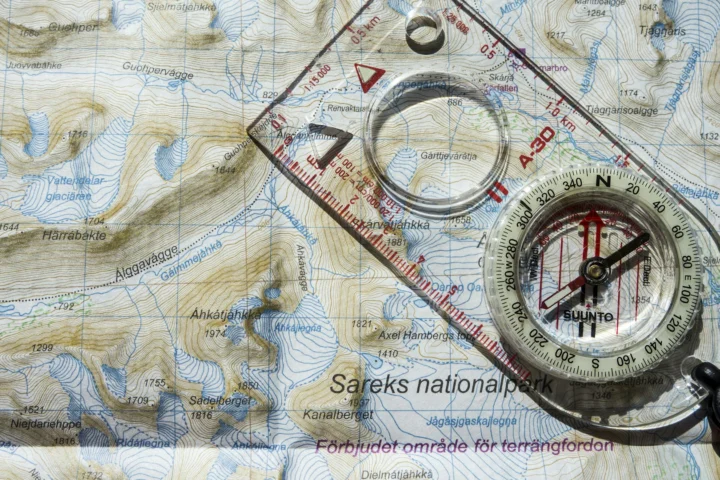
A phone with an offline map is a fine primary tool, but it should not be the only one. Phones die in cold, lose signal in canyons and break when dropped. Carry a paper map of the area and know how to read it; our guide to reading a topographic map covers contours, scale and how to judge a trail’s steepness before you get there.
- Download maps before you leave home, not at the trailhead, where there is often no signal.
- Carry a small power bank if your phone is your map, your camera and your flashlight backup.
- Consider a satellite messenger for remote routes with no cell coverage. It lets you call for help or send a check-in where a phone cannot.
- A whistle on a pack strap is louder and lasts longer than shouting.
What to add for different kinds of day hikes
The Ten Essentials stay the same. What changes is the size and quantity of each, plus a few additions.
| Type of hike | Add or upgrade | Typical pack size |
|---|---|---|
| Short local trail, 1 to 3 hours | Scaled-down essentials: light shell, small headlamp, 1 liter of water, a few bandages | 15 to 20 liters |
| Full-day mountain hike | Warm layer, hat and gloves, 2 liters or more, more food, trekking poles | 20 to 30 liters |
| Desert or summer heat | Much more water, electrolytes, salty snacks, sun hat, cooling bandana; start at dawn | 20 to 30 liters |
| Cold season or shoulder season | Insulated jacket, warm hat, gloves, traction devices for icy trail, insulated bottle | 25 to 30 liters |
| Grizzly country | Bear spray on a hip or chest holster, not in the pack | Any |
| Summit or scramble | Helmet for rockfall-prone routes, extra layer, earlier turnaround time | 25 to 30 liters |
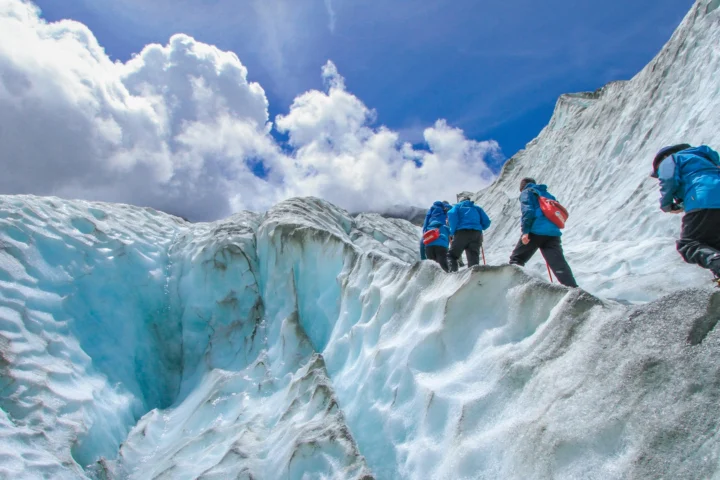
In grizzly range, our guide to how to use bear spray covers where to carry it and when to fire. If your day hike involves using your hands on rock, read what each step from scrambling to mountaineering demands before you go, because route classes change what you need to carry and know.
What usually stays at home
- A three-liter reservoir on a two-hour walk in cool weather.
- A full-size first aid kit in place of a small, well-chosen one.
- Camp stoves, spare shoes and multiple knives.
- Cotton hoodies and jeans, which stay wet once soaked.
- Anything bought because a list said so rather than because you would use it.
Weight you carry is effort you spend, effort is time, and time is how day hikes become night hikes.
Choosing and packing the pack
A 15 to 30 liter pack covers nearly every day hike. Larger packs get filled because the space is there. Look for a hip belt that actually takes weight off your shoulders, a back panel with some ventilation, side pockets for water, and a hip-belt pocket for snacks and your phone.
Pack heavy things such as water close to your back, the rain shell and warm layer near the top where you can reach them in a hurry, and the first aid kit and headlamp in a known spot so anyone in the group can find them. A trash bag or pack liner keeps everything dry in a downpour and doubles as a ground sheet.
Before you leave the car
Tell someone your plan. The NPS hike smart guidance asks hikers to leave a trip plan with a trusted person who is not on the trip: where you are going, your route, who is with you and when you expect to be back. It takes a minute, and it decides whether a search starts that evening or the next afternoon.
Estimate the time honestly. Naismith’s rule gives about 3 miles per hour on easy ground plus 30 minutes for every 1,000 feet of climbing, and rough trail slows most people closer to 2 miles per hour. Our guide to how far you can hike in a day works through real examples. The NPS also suggests checking the weather before you set out and setting a turnaround time if the hike runs long.
Do a 30-second pack check at the trailhead: headlamp, layer, water, map, first aid kit, food. Contents drift between trips, and the headlamp is the item most often left in a drawer. For the kit itself, our guide to what to put in an outdoor first aid kit lists what belongs in a day-hike pouch.
Then set your turnaround time on your watch before the first step, and turn around when it goes off, wherever you are.
Questions people ask
How much water should I bring on a day hike?
About 2 liters is a common starting point for a full day in mild weather, and less for a short walk. Heat changes everything: the Grand Canyon's rangers warn that hikers can lose one to two quarts of water per hour in summer. Drink before you feel thirsty, eat salty snacks to replace electrolytes, and carry a filter or tablets if the route passes reliable water.
What size backpack do I need for a day hike?
A pack of 15 to 30 liters covers almost every day hike. Go toward the small end for short summer trails and toward 25 to 30 liters for long mountain days, winter, or when you carry layers and water for children. Look for a real hip belt, side pockets you can reach while walking, and a rain cover or a liner bag.
Do I really need the Ten Essentials on a short hike?
The National Park Service calls them the minimum everyone should have while recreating outdoors. On a short, busy trail you can scale each item down: a small headlamp, a light wind shell, a few bandages and a space blanket weigh very little. Most rescues start with an ordinary problem such as a twisted ankle, a wrong turn or a late start.
What should I not bring on a day hike?
Leave behind cotton layers that stay wet, a full-size first aid kit, spare shoes, camp stoves and anything bought only because a list said so. Extra weight slows you down, and slow hikers finish late. Valuables, strong-smelling food left in an open car in bear country, and drones in national parks also belong at home.
How do I estimate how long a day hike will take?
Start with Naismith's rule: about 3 miles per hour on easy ground plus 30 minutes for every 1,000 feet of climbing. On rough or rocky trail, many hikers move closer to 2 miles per hour. Add time for breaks and photos, then set a turnaround time and keep to it, especially in winter when daylight is short.
Keep going
Next on the trail
How to Read a Topographic Map: Contours, Scale and Trail Steepness
To read a topographic map, look at the brown contour lines: each connects points of equal elevation, and the contour interval in…
Sep 29, 2026 · 8 min
From Scrambling to Mountaineering: What Each Step Up Demands
Scrambling is Class 3 terrain where you use your hands to climb but usually no rope, while mountaineering adds snow, ice, glaciers…
Oct 6, 2026 · 7 min
How to Choose Hiking Boots (and Why Most People Buy Too Much Boot)
To choose hiking boots, match the boot to the weight you carry, then fit it carefully. Trail runners or hiking shoes suit…
Oct 6, 2026 · 8 min