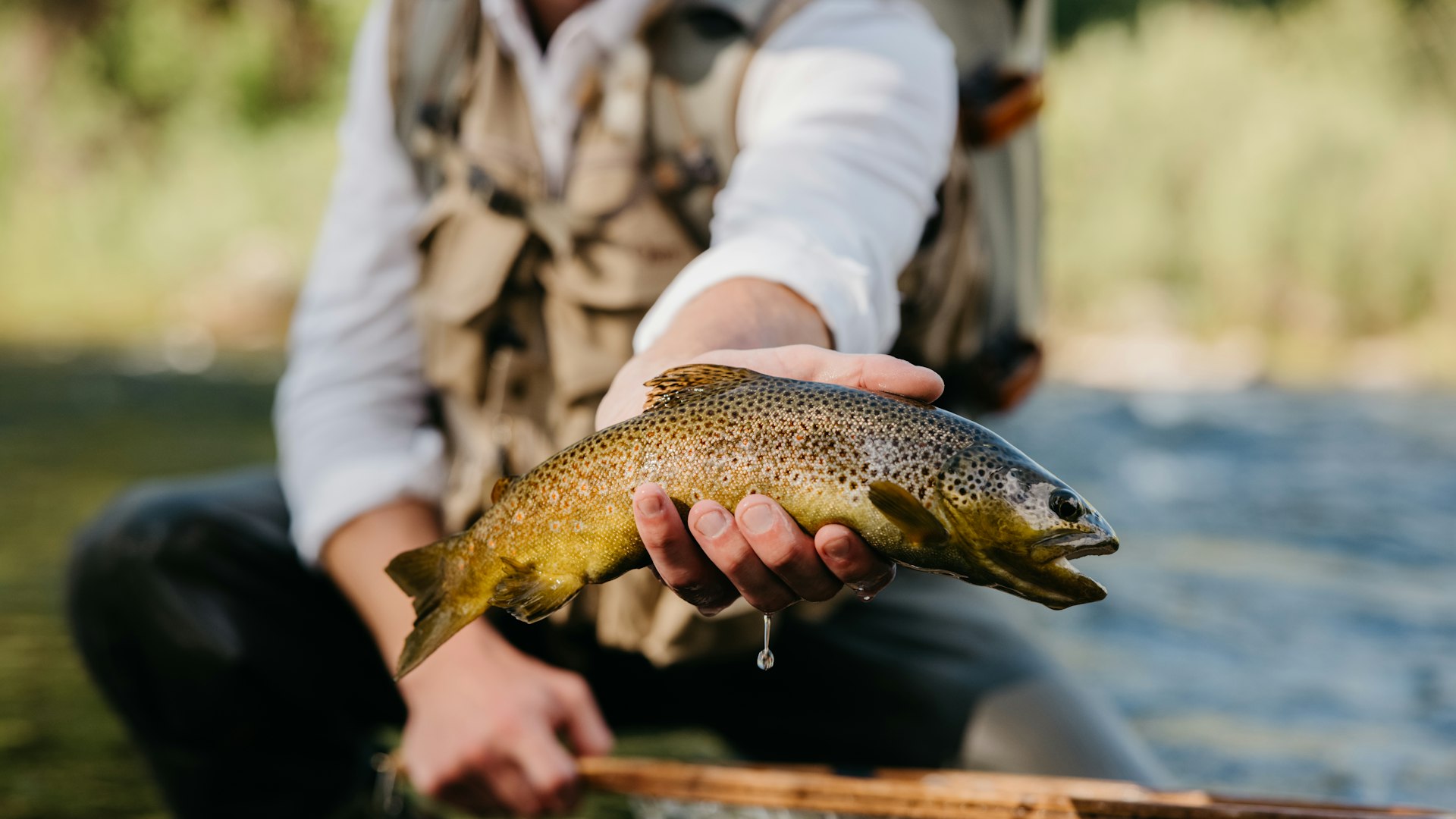
Fishing Licenses in the US: How They Work, What They Cost and Who Needs One
By the Outdoors Haven editors 8 min read Updated October 6, 2026
What changed: Expanded in October 2026 and re-checked against official sources such as the NPS, state agencies and manufacturers.
Pack this into your head
- Fishing licenses are issued by states; there is no national license
- Most states require a license from age 16, with exemptions that vary
- Nonresidents commonly pay two to five times the resident annual price
- Some species need an extra stamp, such as Alaska's king salmon stamp
- Yellowstone uses its own park permit instead of a state license
- License sales help decide each state's share of federal Sport Fish Restoration money
- Buy from the state agency's own site and check this year's regulations
On this route
- How a fishing license works
- What your license money pays for
- Fishing license costs in five big fishing states
- The types of license you will be offered
- Saltwater fishing and the federal registry
- Who does not need a fishing license
- Border waters, national parks and tribal lands
- The rules beyond the license
- Buying and carrying your license
A fishing license in the United States is issued by each state’s fish and wildlife agency, not by the federal government, and it gives you permission to fish that state’s waters under that state’s rules. Most states require one from age 16, charge nonresidents roughly two to five times the resident annual price, and sell one-day, multi-day and annual options. The money pays for the agency that stocks, studies and protects the fish you are trying to catch.
Because every state sets its own prices, ages and rules, and changes them often, any article listing every state is out of date somewhere. What stays the same is the structure. Once you know how the system works, you know what to look for on any state’s website in about five minutes.
How a fishing license works
The basics apply almost everywhere:
- One state at a time. A license covers public waters in the state that issued it. Crossing a state line usually means buying another one.
- Personal, not shared. It is tied to one person. Everyone of license age who is fishing needs their own, including the person holding the second rod in a canoe.
- Age-based. Most states require a license from 16. Texas starts at 17, and Alaska requires residents to have one from 18 and nonresidents from 16.
- Time-based. Options usually run from one day to a year, with multi-year and lifetime licenses for residents in many states.
- Carried while fishing. Most states accept a digital license on your phone. Download it before you lose signal, or carry a printout.
A license is only permission to fish. It does not tell you what you may keep, when, or with what gear. Those rules are in the state’s regulations, covered further down.
What your license money pays for
People searching for the purpose of a fishing license usually want to know whether it is just a fee. It is mostly a funding system, and a well designed one. License revenue goes to the state fish and wildlife agency. On top of that, the federal Sport Fish Restoration program collects excise taxes on fishing equipment, electric motors, import duties on tackle and boats, and part of the federal tax on motorboat and small engine fuel.
The US Fish and Wildlife Service then divides that money among the states with a formula: 40 percent based on each state’s land and water area, and 60 percent based on its number of paid fishing license holders. Every license sold raises a state’s share. That money pays for fish hatcheries and stocking, habitat restoration, fisheries research, boat ramps and fishing piers, and aquatic education programs.
Fishing license costs in five big fishing states
These are the base prices listed by each state agency as of 2026. Most states add a small handling or online fee, some species need an extra stamp or endorsement, and prices change, so check the agency site before you buy.
| State | Resident annual | Nonresident annual | Short-term options | License age |
|---|---|---|---|---|
| California (CDFW) | $64.54 | $174.14 | 1-day $21.09, 2-day $32.40, 10-day nonresident $64.54 | 16 and older |
| Texas (TPWD) | $30 freshwater package, $40 all-water | $58 freshwater, $68 all-water | 1-day all-water $11 resident, $16 nonresident | 17 and older |
| Florida (FWC) | $17 freshwater or saltwater | $47 freshwater or saltwater | Nonresident 3-day $17, 7-day $30 | 16 and older |
| New York (DEC) | $25 (ages 16 to 69), $5 (70 and older) | $50 | 7-day $12 resident, $28 nonresident; 1-day $5 resident, $10 nonresident | 16 and older (freshwater) |
| Alaska (ADF&G) | $20 | $100 | Nonresident 1-day $15, 3-day $30, 7-day $45, 14-day $75 | Residents 18+, nonresidents 16+ |
Two patterns stand out. Short-term licenses are usually the right buy for a vacation, but do the arithmetic: in New York, three single days for a nonresident cost $30, more than half the $50 annual. And the resident gap varies a lot, from about two times in Texas and New York to five times in Alaska.
For any other state, search the state name plus “fish and wildlife” or “department of natural resources” and buy from the official site, usually a .gov address. Third-party sites that look official often resell the same license with an extra fee.
The types of license you will be offered
Resident or nonresident. Residency usually means living in the state for a set period, and agencies can ask for proof such as a driver’s license. In some states, full-time students and active-duty military stationed there qualify for resident prices; New York offers both.
Freshwater, saltwater or both. Many coastal states split them. Texas sells freshwater, saltwater and all-water packages; Florida sells freshwater and saltwater licenses separately, and Florida residents can get a no-cost shoreline-only saltwater license.
Stamps, endorsements and permits. This is where visiting anglers most often get caught out. Some species and waters need an add-on to the base license. In Alaska, anyone required to buy a license who fishes for king salmon needs a king salmon stamp too, priced from $15 for one day to $100 a year for nonresidents and $10 a year for residents. Other states require trout stamps, two-rod endorsements or harvest report cards for species such as sturgeon or steelhead. The agency’s license page lists them.
Multi-year and lifetime. Many states sell these to residents. New York’s lifetime freshwater license, for example, costs $460 for residents up to age 69.
Saltwater fishing and the federal registry
There is no federal saltwater license, but there is a federal registry. Under NOAA’s National Saltwater Angler Registry, most coastal states are exempt states because they share license or survey data with NOAA. If you are licensed or registered in one of them, you do not need to register federally.
Hawaii, Puerto Rico, the US Virgin Islands and Washington, DC are not exempt. Anglers there without a state saltwater license or registration who may catch anadromous fish must register with NOAA, which is free. Some states use a free registration instead of a paid saltwater license: New York, for example, requires a marine fishing registration for saltwater species.
Who does not need a fishing license
The common exemptions, all of which vary by state:
- Children under the license age, most often 16.
- Seniors in some states, either fully exempt or with a free or reduced-price license. Alaska residents 60 and older can get a free permanent ID card instead, and New York residents 70 and older pay $5.
- Disabled veterans, active-duty military and people with certain disabilities, often with free or discounted licenses.
- Landowners and private ponds in some states. New York exempts resident farmers fishing on farmland they occupy and cultivate, and anglers on licensed fishing preserves.
- Free fishing days. Most states set a few days a year when anyone can fish without a license. Other rules, such as limits and seasons, still apply.
An exemption in one state tells you nothing about the next. Check rather than assume.
Border waters, national parks and tribal lands
Border waters. Some lakes and rivers on state lines have reciprocity agreements, and others do not. New York’s license page is a good example: a New York license covers the Pennsylvania side of the Delaware River along the boundary, works on Greenwood Lake and Indian Lake only from a boat or ice, and does not cover the Ontario side of Lake Ontario or Lake Erie. Lake Champlain has its own reciprocal arrangement with Vermont.
National parks. Most parks follow the state license system, but some do not. Yellowstone requires its own fishing permit instead of a Wyoming, Montana or Idaho license: $40 for three days, $55 for seven days or $75 for the season. Anglers 15 and under can fish with a supervising adult who holds a permit, or get a free permit of their own. The park also requires lead-free artificial lures or flies, barbless hooks, and release of all native fish. In Great Smoky Mountains National Park, a Tennessee or North Carolina license is valid anywhere in the park, no trout stamp is needed, and natural bait is prohibited. A national park pass covers entry, not fishing; see our national park pass guide for what it does include.
Tribal lands. Reservations may set their own fishing rules and permits, separate from the state. Ask the tribe’s natural resources office before fishing on tribal waters.
The rules beyond the license
The license is permission. The state’s annual regulations booklet, free on the agency website, covers everything else:
- Seasons: many species close for part of the year, usually around spawning.
- Bag limits: how many of each species you may keep per day, and sometimes how many you may possess.
- Size limits: minimum lengths, and slot limits where fish within a size band must go back.
- Gear rules: fly-only, artificial-lure-only or single barbless hook waters.
- Water-specific rules: individual lakes and river sections often differ from the statewide default.
- Bait and invasive species rules: moving live bait, or a boat full of lake water, between waters is restricted in many states.
Paddlers who fish should read these before the trip, because the best spots are often on special-regulation water. Our guide to planning a first canoe trip covers packing for a fishing trip by canoe, and canoe vs kayak compares which boat suits fishing. If you are combining fishing with bear viewing in Alaska, our Alaska bear viewing guide explains the extra permit needed to fish the Brooks River.
Buying and carrying your license
Buy the license before you reach the water: online through the state agency, by the agency’s phone line, or at a licensed agent such as a bait shop or sporting goods store. Have your driver’s license or ID ready, because residency and age are checked at purchase. Then save the license to your phone and download it for offline use, screenshot it, or print it. A license you cannot show a game warden at a remote lake with no signal counts for little.
The last step takes 20 minutes and saves most of the trouble: open the current regulations for the exact lake or river you will fish, and read the section for that water before you tie on a hook.
Questions people ask
What is the purpose of a fishing license?
A fishing license gives you legal permission to fish a state's waters and pays for managing them. License revenue funds state fish and wildlife agencies, and the number of paid license holders also sets 60 percent of each state's share of federal Sport Fish Restoration money, which comes from excise taxes on fishing gear and boat fuel. That money pays for stocking, habitat, research and boat ramps.
How does a fishing license work?
You buy it from the state where you will fish, usually online, by phone or at a sporting goods store. It is tied to you personally, not to a boat or a group, and covers a set period from one day to a year or more. You must carry it while fishing, often on your phone. It does not replace the state's separate rules on seasons, bag limits and gear.
Is there a fishing license valid in all US states?
No. There is no national fishing license, and a license from one state is generally not valid in another. The exceptions are specific border waters where neighboring states have agreements, such as parts of the Delaware River between New York and Pennsylvania. If you fish in two states on one trip, you usually need two licenses.
Who does not need a fishing license?
Children under the state's age limit, most often 16, and in many states seniors above a set age or residents with certain disabilities or military service. Most states also hold free fishing days when anyone may fish without a license, and some exempt farm landowners or licensed private ponds. The details vary widely, so check the state agency site before assuming you are exempt.
Do I need a license to fish in the ocean?
Usually yes. Most coastal states require a saltwater license or a free saltwater registry, and NOAA treats anglers licensed in those states as covered. Hawaii, Puerto Rico, the US Virgin Islands and Washington, DC are not exempt states, so anglers there without a state saltwater license or registration who may catch anadromous fish must register free with the National Saltwater Angler Registry.
Keep going
Next on the trail
Bear Canister Guide: Where They’re Required, Which Ones Count and How Much Food Fits
A bear canister is a hard-sided, lockable food container that bears can't open. It is required for backcountry camping in Yosemite, parts…
Oct 13, 2026 · 9 min
How to Choose a Canoe Paddle: Length, Bent vs Straight Shaft, Blades and Materials
To choose a canoe paddle, size it by your seated torso, not your height: sit on a flat chair and measure from…
Oct 13, 2026 · 8 min

Backpacking With Kids: Ages, Distances and How to Plan the First Overnight
Kids can go backpacking at almost any age, but the first trip should be one night and 1 to 3 miles from…
Oct 13, 2026 · 8 min