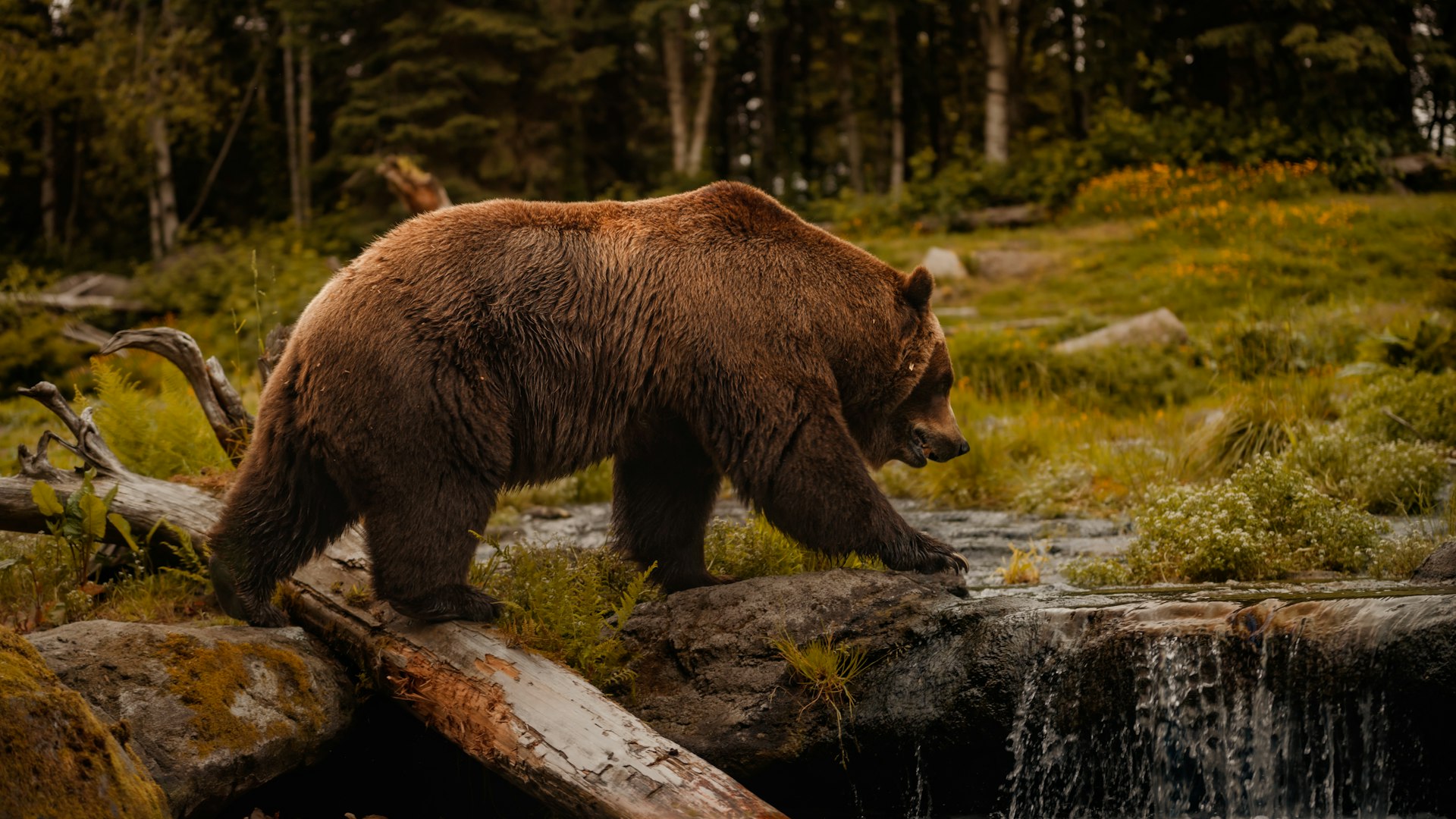
Bear Canister Guide: Where They’re Required, Which Ones Count and How Much Food Fits
By the Outdoors Haven editors 9 min read Updated October 13, 2026
Pack this into your head
- Yosemite, Olympic, Rocky Mountain and the Eastern High Peaks accept hard-sided containers only.
- Denali accepts two Ursack models; most canister-required areas do not.
- IGBC certification means grizzly-tested, but each park decides what it accepts.
- A BearVault BV450 holds about 3 to 4 days of food, a BV500 about 7.
- Everything scented goes inside: food, trash, sunscreen, toothpaste, lip balm.
- Storage distance from your tent ranges from 25 feet to 100 yards depending on the park.
- Denali, Grand Teton and Olympic lend canisters at no extra charge.
On this route
- Where bear canisters are required
- What "approved" means: IGBC certification and park lists
- Canister vs Ursack vs hanging
- Bear canister sizes and how much food fits
- How to pack a bear canister
- Where to put the canister at night
- Renting, borrowing or buying a canister
- Mistakes that cost people their food
A bear canister is a hard-sided, lockable container that keeps your food, trash and toiletries away from bears overnight. You need one wherever the land manager requires it, and that list now covers most of the high-traffic backcountry in the US: the Yosemite Wilderness, all wilderness camping in Olympic National Park, Rocky Mountain National Park below treeline from April 1 to October 31, Grand Teton’s backcountry, most of Denali’s backcountry units, several zones in Sequoia and Kings Canyon, and the Eastern High Peaks Wilderness in New York’s Adirondacks from April 1 to November 30.
The catch is that there’s no single national list of approved containers. Each park or agency decides what counts, so a soft bear bag that’s legal in Denali will get you turned away at a Yosemite permit desk. Check the rule for your exact area, then pick a container that satisfies the strictest place you plan to go.
Where bear canisters are required
These rules come from each agency’s own pages as of 2026. Parks adjust zones and dates, so confirm them when you get your permit.
| Area | What’s required | Season | Soft bags (Ursack) accepted? |
|---|---|---|---|
| Yosemite National Park | Food stored in an allowed container or a food locker throughout the park; hanging food is illegal | Year-round | No, every container on the park list is hard-sided |
| Sequoia and Kings Canyon | Containers required in the Dusy Basin, Rae Lakes Loop, North Dome, Rock Creek and Pear and Emerald Lakes areas; boxes or canisters elsewhere | May 1 to October 31 in the required areas | Check the park’s allowed-container list |
| Olympic National Park | Bear canisters required for all wilderness camping, including the coast | Year-round | No, the park says soft-sided bags are not an acceptable alternative |
| Rocky Mountain National Park | Hard-sided commercial canister below treeline and in the Longs Peak Boulder Field | April 1 to October 31 | No, hard-sided only |
| Denali National Park | Approved bear-resistant food container in backcountry units 1 to 21 and 23 to 43 | April 15 to September 30 | Yes, Ursack Major and AllMitey are on the park’s list |
| Grand Teton National Park | IGBC-approved bear canister for food, trash and toiletries in the backcountry | Backcountry season | Ask the permit office for your route |
| Eastern High Peaks Wilderness, NY | Commercially made bear-resistant canister for overnight users | April 1 to November 30 | No, DEC excludes non-rigid containers, sacks and food hangs |
Two details trip people up. In Sequoia and Kings Canyon, the area description for the Rae Lakes Loop gives a start date of the Friday before Memorial Day, which differs from the parkwide May 1 date, so read the page for your specific zone. And in Olympic, older guides describe canisters as a coast-only rule. The park now requires them for all wilderness camping, coast included.
What “approved” means: IGBC certification and park lists
The Interagency Grizzly Bear Committee (IGBC) runs the main testing program for bear-resistant products in the US. Products are tested with captive grizzly bears at the Grizzly & Wolf Discovery Center in West Yellowstone, Montana, and at the Washington State University Bear Center in Pullman. A product that passes gets a model-specific certification number, which you can match against the IGBC certified products list.
The July 2026 list includes, among backpacking containers, BearVault’s BV425, BV450, BV475, BV500 and BV One, Grub Can models, the REI Traverse Bear Can, the Frontiersman Insider Bear Safe, UDAP’s No Fed Bear and two Ursack bags. Some long-standing canisters, such as the Garcia Backpackers’ Cache, Counter Assault’s Bear Keg, the Bare Boxer and Lighter1 models, appear on a separate “unconfirmed” list. That means the maker hasn’t completed IGBC’s annual verification, not that the product failed.
Two limits matter. IGBC says certification doesn’t guarantee a bear will never get in. And IGBC explicitly does not decide which products satisfy a park’s regulations. Yosemite publishes its own list of allowed containers, which includes the Garcia, most BearVault models, the Bearikade Weekender and Expedition, the Bear Keg, Bare Boxer and Lighter1 canisters, but no soft bags. Grand Teton and Denali defer to IGBC. Rocky Mountain and New York set a hard-sided requirement rather than a brand list.
Canister vs Ursack vs hanging
| Method | Strengths | Weaknesses | Where it’s a legal option |
|---|---|---|---|
| Hard-sided canister | Accepted nearly everywhere; works above treeline; nothing to tie; doubles as a camp stool | Heavy (about 2 to 3 pounds for common models); bulky in a pack; fixed volume | All canister-required areas, subject to each park’s list |
| Ursack (soft, high-strength fabric bag) | Lighter and packs into odd spaces | Must be tied to a tree or fixed object; food inside can be crushed; banned in many required areas | Denali and places that accept IGBC-certified products without a hard-sided rule |
| Food hang or counterbalance | Only needs cord and a bag | Needs the right tree; bears in many parks have learned to defeat it; illegal in Yosemite | Areas without a canister rule, as a fallback |
Hanging is the weakest choice where bears are habituated. Sequoia and Kings Canyon describe the counterbalance method in detail (a branch about 20 feet up, the bags at least 12 feet off the ground and about 10 feet out from the trunk) and then say it often fails in those parks and should be a last resort. If you do carry an Ursack where it’s allowed, Ursack’s instructions are to close it with a tight double overhand knot and then wrap the cord around a tree or fixed object and finish with a figure 8.
Bear canister sizes and how much food fits
Canister volume is listed in cubic inches or liters. Manufacturers’ own day estimates are the best starting point, and they assume food that has been repackaged and packed tightly.
| Container | Volume | Weight | Food for one person | Price or cost (2026) |
|---|---|---|---|---|
| BearVault BV450 | 440 cu in (7.2 L) | 2 lb 1 oz | 3 to 4 days (BearVault) | $89.99 |
| BearVault BV500 | 700 cu in (11.5 L) | 2 lb 9 oz | About 7 days (BearVault) | $99.99 |
| Garcia Backpackers’ Cache 812 | 615 cu in (10 L) | Not listed by Yosemite | Roughly 4 to 6 days, by volume | Yosemite rental $5 per week, $95 deposit |
| Denali small loaner | Not listed | Not listed | 3 to 5 days (NPS) | Free loan |
| Denali large loaner | Not listed | Not listed | 7 to 10 days (NPS) | Free loan |
| Ursack Major line | Varies by model | Varies by model | Varies | About $120 to $155 |
BearVault’s numbers work out to roughly 100 to 150 cubic inches of canister space per person per day. Use that to size a trip: a solo three-night trip fits in a BV450 if you pack carefully, a couple on a three-night trip needs a BV500 or two small canisters, and a family usually needs two. Remember that toiletries and trash take space too, and trash grows as the trip goes on while food shrinks.
How to pack a bear canister
Yosemite’s rangers point out that a canister always occupies the same space, and that most people pack it badly. A tight pack is the difference between fitting your last dinner and carrying it in your hand.
- Repackage everything. Strip boxes and bulky wrappers at home and move food into zip-top bags with the air pressed out. Tortillas, nut butter in a squeeze pouch and dense bars beat bread and chips.
- Pack by day, in reverse. The last day’s food goes on the bottom, the first night’s dinner on top. You won’t have to unpack everything each evening.
- Fill the gaps. Pour loose items like drink mix packets, nuts and candy into the spaces between bags.
- Keep scented items inside. Yosemite’s list includes sunscreen, soap, insect repellent, lip balm, deodorant, medications and feminine products. If it goes in your mouth or on your skin, it goes in the canister.
- Plan for the first night overflow. If one day of food won’t fit, eat it before you reach camp. Many hikers carry lunch and snacks for day one outside the canister and keep them within arm’s reach until they’re eaten.
- Carry it high and centered. In a pack, a canister rides best upright, close to your back. Some hikers strap it horizontally on top of the pack, which works with pack-specific straps.
Dogs add a step: in New York’s Eastern High Peaks, DEC lists pet food among the items that must be stored. If you’re bringing a dog, budget space for its food and read our guide to hiking with dogs for park pet rules.
Where to put the canister at night
The canister only works closed and locked, set on the ground away from your tent. Parks give different distances:
- Yosemite: 25 to 50 feet from your campsite, somewhere a bear can’t easily roll it away, not near a cliff or water.
- Eastern High Peaks: on level ground at least 100 feet from your campsite and cooking area.
- Rocky Mountain: 70 adult steps (200 feet) from camp whenever you’re not actively using the food.
- Grand Teton: cook, eat and store the canister at least 100 yards downwind from your tent, on flat ground, hidden in brush or behind rocks.
Every park agrees on a few points. Never tie a rope or anything else to the canister, because Yosemite notes that a rope gives a bear something to carry the canister away with. Keep it away from slopes, cliffs and water, since bears bat canisters around. You can set pots on top as a noise alarm, which Yosemite suggests.
A canister is food storage, not personal protection. In grizzly country, carry bear spray where you can reach it in seconds and know how to use it; our guide on how to use bear spray covers range, wind and timing.
Renting, borrowing or buying a canister
For a first trip, borrowing is often free or nearly free:
- Denali lends approved containers free from the Backcountry Information Center when you get your permit. If you bring your own, staff will check that it’s on the approved list before issuing the permit. See Denali’s container page.
- Grand Teton runs a complimentary loan program. Canisters must come back clean, and the park notes that failing to return one is a federal violation.
- Olympic loans canisters from its Wilderness Information Centers, and the park’s backpacking FAQ says the loan is included in your permit cost. Supply is first come, first served and can run out on busy weekends; canisters are not available at the Ozette Ranger Station.
- Yosemite rents the Garcia Backpackers’ Cache for $5 per week with a $95 credit card deposit at staffed wilderness permit stations.
- Sequoia and Kings Canyon rent containers through the Sequoia Parks Conservancy at visitor centers, except Cedar Grove.
- Rocky Mountain and the Eastern High Peaks expect you to bring your own; outdoor shops in nearby towns commonly rent them.
Buy your own once you’re doing two or three trips a year. A BV450 or BV500 runs about $90 to $100 in 2026 and is accepted across the parks above. Before you buy a clear model for the Adirondacks, read the DEC’s canister page: it reports that black bears in the Eastern High Peaks have regularly defeated clear plastic canisters, and it encourages campers to choose another type, though that isn’t required. If you’re heading to Alaska for bears rather than backpacking, our Alaska bear viewing guide covers how guided trips handle food and distance.
Mistakes that cost people their food
- Leaving the lid unlatched “just for a minute” while cooking. Yosemite says to keep it closed and locked even around camp.
- Food left in the pack. A single wrapper in a hip-belt pocket is enough to make a bear investigate. Check every pocket before dark.
- Setting the canister near a drop-off or stream, where a bear can roll it out of reach and you can’t recover it.
- Overflow bags. Food that doesn’t fit isn’t stored. Size the canister for the trip, or carry two.
- Assuming a park’s list matches IGBC. It often doesn’t. Check the land manager’s own page, especially for soft bags.
Proper storage protects the bear as much as your dinner: a bear that gets human food keeps coming back to campsites. That’s also part of the Leave No Trace principle of respecting wildlife. If you’re taking children into bear country, our guide to backpacking with kids covers how to split food and canister weight across the group. The single most useful habit: pack the canister at home the night before, with every meal in it. If it doesn’t close in your kitchen, it won’t close at the trailhead.
Questions people ask
Do I need a bear canister for backpacking?
Only where the land manager requires one, but those places include most of the busiest backcountry in the West and the Eastern High Peaks in New York. Yosemite, Olympic, Rocky Mountain below treeline, Grand Teton, much of Denali and several Sierra zones all require them. Elsewhere a canister is still the most reliable option, because hangs often fail and you avoid hunting for a suitable tree.
Is an Ursack allowed instead of a bear canister?
It depends on the park. The Ursack Major and AllMitey are IGBC-certified and Denali lists them as approved. Yosemite does not include any soft container on its list, Olympic says soft-sided bags are not an acceptable alternative, Rocky Mountain requires hard-sided canisters, and New York's regulation excludes non-rigid containers in the Eastern High Peaks.
How many days of food fit in a bear canister?
BearVault rates its BV450 (440 cubic inches) at 3 to 4 days for one person and its BV500 (700 cubic inches) at about 7 days. Denali describes its small loaner as 3 to 5 days and its large one as 7 to 10. Dense, low-bulk food and repackaging in zip bags push you toward the top of those ranges.
Can I rent a bear canister in the park?
Often, yes. Yosemite rents the Garcia Backpackers' Cache for $5 per week with a $95 deposit at its wilderness permit stations. Sequoia and Kings Canyon rent through visitor centers except Cedar Grove. Denali and Grand Teton lend canisters free, and Olympic includes the loan in your permit cost, though loaners can run out on busy weekends.
How far from my tent should I put a bear canister?
Follow the park's number. Yosemite says 25 to 50 feet from your campsite, New York's DEC says at least 100 feet from tents and cooking areas, Rocky Mountain says 200 feet, and Grand Teton says at least 100 yards downwind of your tent. In every case, keep it on flat ground away from cliffs and water.
Keep going
Next on the trail
How to Choose a Tent: Capacity, Season Ratings and What They Hide
To choose a tent, size up: a tent's capacity assumes sleepers packed shoulder to shoulder with little room for gear, so two…
Oct 6, 2026 · 7 min
What to Put in an Outdoor First Aid Kit: A Hiking and Camping Checklist
An outdoor first aid kit should cover what actually happens on the trail: blisters, cuts, sprains, splinters, ticks, stings and stomach trouble.…
Oct 6, 2026 · 7 min
Sleeping Bag Temperature Ratings: What the Number Actually Means
Sleeping bag temperature ratings come from the ISO 23537 lab test, which gives three numbers. Comfort is the lowest temperature for sleeping…
Oct 6, 2026 · 7 min