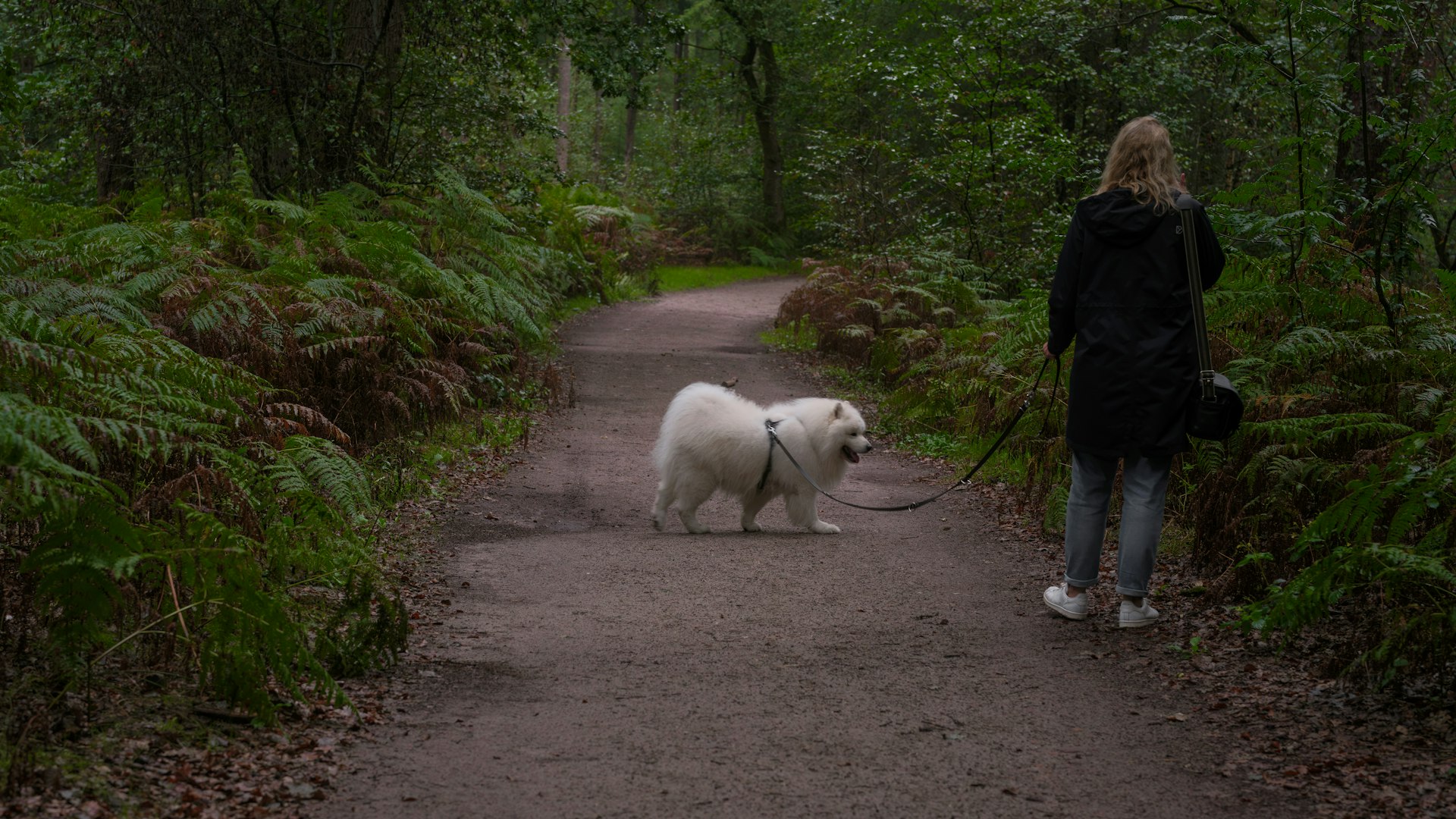
Hiking With Dogs: Where They’re Allowed, What to Carry and Staying Safe
By the Outdoors Haven editors 8 min read Updated September 29, 2026
Pack this into your head
- National parks require leashes no longer than 6 feet where dogs are allowed.
- Most national park trails are closed to dogs; Acadia and Shenandoah are big exceptions.
- BARK stands for bag waste, always leash, respect wildlife, know where you can go.
- National forests and BLM land allow dogs on most trails, with local rules.
- Carry water for your dog; don't count on streams in summer.
- Harmful algae can kill a dog within hours of contact.
On this route
You can hike with a dog on most national forest and Bureau of Land Management trails and in many state parks. National parks are stricter: most allow leashed dogs only in developed areas, on roads, in campgrounds and on a few paved or front-country paths, and close their backcountry trails to pets. Wherever dogs are allowed on federal land, expect a leash rule of 6 feet or shorter. For the hike itself, carry water and a bowl, waste bags and a small dog first aid kit, skip the hottest hours, and keep your dog away from wildlife and scummy water.
Those rules exist for reasons that matter to dog owners too: dogs chase and stress wildlife, can draw an angry bear or moose back toward you, and are vulnerable to heat, cliffs and toxic algae. Here’s where you can go, what to bring and how to keep a hiking dog safe.
Where dogs are allowed on public land
| Land type | Dogs on trails? | Typical rules |
|---|---|---|
| National parks | Usually not, with exceptions | Leash of 6 feet or less; allowed in developed areas, campgrounds and some trails |
| National forests | Yes, on most trails | Leash required in campgrounds, picnic areas and some trails; voice control allowed in many other areas |
| BLM land | Yes, generally | Varies by field office and special areas |
| National wildlife refuges | Varies | Often leashed on designated trails only; some refuges ban pets |
| State parks | Usually yes | Leash rules set by each state, often 6 feet |
Rules can also change by season. Beaches close to protect nesting birds, trails close during lambing or calving, and some forests require leashes in wildlife areas at certain times of year. Check the specific park or ranger district page before you load the car.
National park rules and the BARK Ranger program
Federal regulations for national parks require that pets be leashed on a leash no longer than 6 feet, crated or otherwise physically restrained at all times. They can’t be left unattended, including tied up at a campsite or shut in a car. The NPS camping with pets page notes that many parks don’t allow pets on hiking trails or boardwalks, or in lakes, streams and the backcountry.
The NPS sums up its pet rules as BARK:
- Bag your pet’s waste
- Always leash your pet
- Respect wildlife
- Know where you can go
Each park designs its own BARK Ranger program. Some have ranger-led dog walks, some a pledge you take at the visitor center, and many sell a BARK Ranger tag or badge for the collar. It’s worth asking at the desk because the ranger will also tell you exactly which trails are open.
Dog-friendly national parks
- Acadia (Maine). The standout. According to the park’s pet page, dogs are allowed on 100 miles of hiking trails and 45 miles of carriage roads. They’re banned from the iron-rung cliff routes (Precipice, Beehive, Ladder Trail to Dorr Mountain, Beech Cliffs, Perpendicular and part of Jordan Cliffs), from Sand Beach June 15 to September 8 and Echo Lake beach May 15 to September 15, and from swimming in lakes that serve as public water supplies.
- Shenandoah (Virginia). The park closes fewer than 20 miles of its 500-plus miles of trails to pets. Closed trails include Old Rag, Dark Hollow Falls, Stony Man, Bearfence Mountain and Limberlost.
- Grand Canyon (Arizona). Leashed dogs can walk trails above the rim on the South Rim, including the Rim Trail, but not the inner canyon trails like Bright Angel. A kennel near Maswik Lodge boards dogs if you want to hike below the rim.
- Others with good options: Cuyahoga Valley in Ohio, Great Sand Dunes in Colorado, Petrified Forest in Arizona and White Sands in New Mexico.
At parks like Zion, Yellowstone, Glacier, Rocky Mountain and Yosemite, trail options for dogs are very limited, usually a paved path or two. If your trip centers on big trail hikes there, board your dog or plan the dog days for the surrounding national forest. Your national park pass doesn’t change pet rules; the pass covers entry, not access.
Is your dog ready for the trail?
A dog that runs happily at the park may still struggle on a 6-mile climb with rocks and heat. Build distance gradually, the same way you would for yourself, and check with your vet before long or strenuous hikes, especially for puppies, older dogs, and short-nosed breeds such as bulldogs and pugs that overheat easily.
- Vaccinations and parasite prevention. The NPS recommends current vaccinations and protection against fleas, ticks and heartworm before camping with a pet.
- ID. A collar with tags and a microchip with current contact information.
- Recall. Even where off-leash is legal, your dog needs to come back instantly, every time, including when a deer bolts.
- Paws. Pads toughen with regular walking on varied surfaces. Rock, scree and hot sand can tear soft pads.
What to pack for your dog
Start from your own day hike packing list and add:
- A 6-foot leash (retractable leashes don’t meet most park rules when extended beyond 6 feet) and a well-fitted harness
- Water and a collapsible bowl
- Food or treats for anything over a couple of hours
- Waste bags, plus a bag to carry used ones out
- A small dog first aid kit: gauze, self-adhesive wrap, tweezers or a tick tool, saline to flush eyes and wounds, and booties to protect a cut pad. Your outdoor first aid kit covers much of this already.
- A towel, and a reflective vest during hunting seasons in national forests
Fit, healthy adult dogs can carry a dog pack with their own water and waste bags, but build up slowly and keep the load light; a vet can advise what’s sensible for your dog’s size.
Water, heat and hazards
Water
How much water a dog needs depends on its size, the temperature and the effort, so there’s no single number. Offer water at every break on warm days rather than waiting for heavy panting. Don’t rely on streams, which may be dry by late summer or contaminated with Giardia and the same parasites that affect people; see how to purify water backpacking.
Heat
Dogs cool mainly by panting and struggle much more than people in heat and humidity. Hike early in the morning or in the evening, pick shaded trails near water, and turn back if your dog lags, lies down in shade, drools heavily or stumbles. Those are signs of heat illness and need a vet. Never leave a dog in a parked car, even with windows cracked. Desert trails and dark rock can burn paws, so test the surface with the back of your hand: if you can’t hold it there comfortably, it’s too hot for bare paws.
Algae
Harmful algal blooms turn water green, blue-green or scummy and can smell bad. The CDC warns that animals can get very sick or die within hours of contact. Keep your dog out of discolored or scummy water, rinse it off with clean water if it goes in, and call a vet right away if it shows any symptoms.
Other hazards
- Ticks: check ears, armpits and between toes after every hike in the East and Midwest.
- Foxtails and burrs: barbed grass seeds in the West work into ears, noses and paws.
- Porcupines, snakes and skunks: another reason to leash in brush.
- Cliffs and fast water: dogs don’t judge edges or currents well.
Wildlife and dogs
Dogs chase, and wild animals read them as predators. A loose dog can push deer and birds off nesting grounds, get badly injured by a moose or a mother elk, or provoke a bear and run straight back to you with the bear following. That’s why the NPS puts “respect wildlife” in its BARK rules and why so many parks keep dogs off trails entirely.
In bear country, keep your dog leashed and close, store dog food with your own food in lockers, canisters or hangs, and carry bear spray where it’s allowed. Our guide on how to use bear spray covers what to do if a bear approaches.
Trail etiquette with a dog
- Step aside and shorten the leash when others pass. Not everyone likes dogs, and some people are afraid of them.
- Yield to horses and move off the trail on the downhill side, with your dog held close and quiet.
- Pack out the waste. Don’t leave filled bags by the trail to “pick up later.” If you must bury it where allowed, use a cathole 6 to 8 inches deep and 200 feet from water, as described in the Leave No Trace principles.
- Keep barking down in camp, and don’t let your dog wander into other sites.
- Ask before letting your dog greet another dog or person.
Camping with your dog
Dogs are allowed in most national park and national forest campgrounds on a leash. Bring a tether with a ground stake so the dog can’t wander, and keep it inside the tent with you at night. A dog adds real space in a tent, so size up; see how to choose a tent. Bring a pad or blanket for the dog on cold nights, and check your camping checklist for everything else.
On lake trips, dogs make good canoe partners once trained to sit still in the center of the boat, and a dog life jacket with a grab handle is worth buying; see how to plan your first canoe trip.
The most useful habit before any trip is a two-minute check of the specific trail’s pet rules on the park or ranger district website. It’s the difference between a great day out and turning around at the trailhead with a disappointed dog.
Questions people ask
Are dogs allowed in national parks?
Yes, but usually not on trails. Most national parks allow leashed pets in developed areas, on roads, in campgrounds and on some paved paths, while closing backcountry trails. A few parks are much more open: Acadia allows dogs on 100 miles of trails and 45 miles of carriage roads, and Shenandoah closes fewer than 20 of its 500-plus trail miles to pets. Always check the individual park's pets page.
Which national parks are most dog friendly?
Acadia and Shenandoah stand out because most of their trails allow leashed dogs. Grand Canyon allows pets on trails above the rim on the South Rim, including the paved Rim Trail, but not below the rim. Cuyahoga Valley, Great Sand Dunes, Petrified Forest and White Sands also have good options for dogs. The NPS BARK Ranger program runs at many of these parks, and some sell dog badges or tags.
How much water does a dog need on a hike?
It depends on the dog's size, the temperature and how hard the hike is, so there is no single number. A common starting point is about 1 ounce of water per pound of body weight per day at rest, with much more during exercise and heat. Offer water every 15 to 30 minutes on warm days, carry a collapsible bowl, and don't rely on streams, which may be dry or contaminated.
What is a BARK Ranger?
BARK Ranger is a National Park Service program for pets and their owners. BARK stands for Bag your pet's waste, Always leash your pet, Respect wildlife, and Know where you can go. Each park runs its own version: some offer ranger-led walks or a pledge, and many sell a BARK Ranger tag or badge at the visitor center or park store. It's a fun way to learn each park's specific pet rules.
Can dogs hike in national forests off leash?
Sometimes. National forests generally allow dogs on trails, and many allow them under voice control outside developed areas. But forests, wilderness areas and individual trails set their own rules, and leashes are commonly required in campgrounds, picnic areas, on busy trails and during wildlife or nesting seasons. Check the ranger district's page before you go, and leash up whenever your dog wouldn't reliably come back from a deer.
Keep going
Next on the trail
How to Choose a Canoe Paddle: Length, Bent vs Straight Shaft, Blades and Materials
To choose a canoe paddle, size it by your seated torso, not your height: sit on a flat chair and measure from…
Oct 13, 2026 · 8 min
Family Dude Ranch Vacations: What a Week Really Costs and How to Pick the Right Ranch
A family dude ranch vacation usually means a week of all-inclusive lodging, meals and daily horseback riding. Rates published in 2026 run…
Oct 6, 2026 · 7 min
Backpacking With Kids: Ages, Distances and How to Plan the First Overnight
Kids can go backpacking at almost any age, but the first trip should be one night and 1 to 3 miles from…
Oct 13, 2026 · 8 min